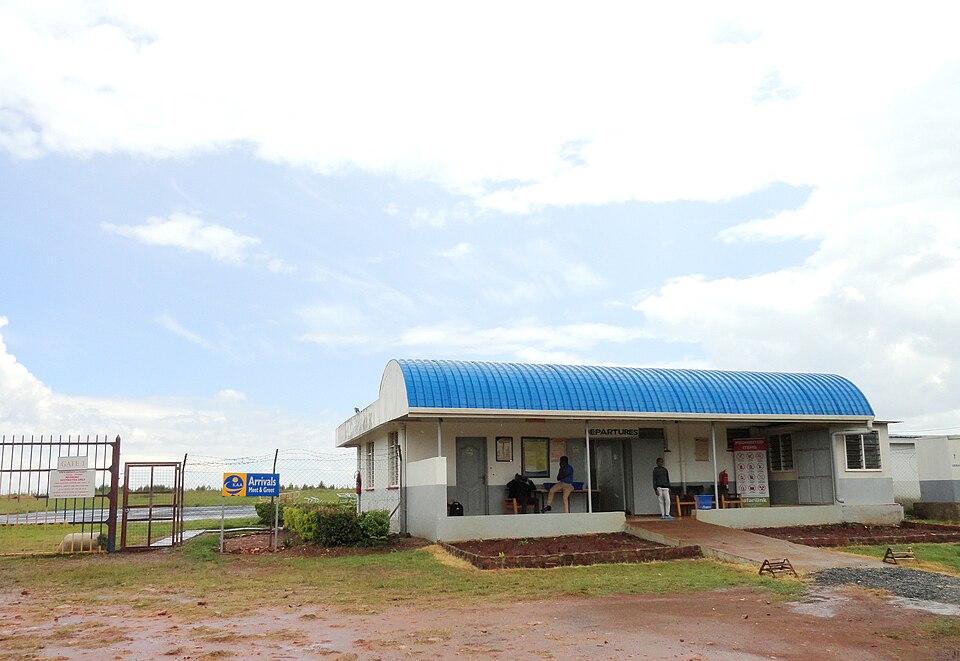
Why Kitale businesses are investing in B2B and wholesale portals
Kitale is a municipality in trans-Nzoia county, kenya, home to about 162,000 people, and one of the markets in Kenya where we build B2B and wholesale portals.
Western Kenya agricultural trading town — a business base that increasingly wants to sell online rather than through calls, messages and spreadsheets.
Kenya has more than 7 million micro, small and medium enterprises (Kenya National Bureau of Statistics). Kenya is the global leader in mobile money, so M-Pesa STK Push checkout is a must. Nairobi is East Africa's commerce and startup hub.
For a business in Kitale, the opportunity is to own the customer relationship: your own B2B ordering portal keeps your margin, your data and your brand, while marketplaces and social channels become additional sales routes instead of the only one.
Localised for Kitale, not translated into it
Conversion in Kitale depends on small local signals — the right currency, the right words and the right payment and courier names.
Currency and pricing
The store speaks Kenyan shilling: KES amounts from product page to invoice, so Kitale buyers never convert in their heads.
Language and content
Content can be produced in English and Swahili, so a Kitale customer reads the store in the language they use at home.
Local trust signals
We add the payment logos, courier names and policy pages shoppers in Kitale recognise: M-Pesa (Lipa na M-Pesa, STK Push) and Airtel Money and delivery through G4S Courier.
Domain, phone and contact
Using .ke where it suits you signals a local business to shoppers and search engines. Contact buttons are pre-set with +254, so a customer in Kitale taps once to call or message.
Designed to your requirements, not a template
Your B2B ordering portal is planned, designed and coded for your business model — not adapted from someone else's — and it can ship with a customer or staff mobile app on day one.
In Kitale we typically work with wholesalers, FMCG distributors, industrial suppliers and electrical and hardware traders, and with sellers in categories such as phones and electronics, fashion, groceries and beauty that have strong online demand in Kenya.
We start with a requirements meeting, show you a working demo within 24 hours, and only then propose scope, milestones and budget.
Core modules we build for Kitale clients
Nothing here is fixed: modules are switched on, reshaped or built from scratch around how your Kitale business sells.
Business accounts
Registration, KYC and approval, company hierarchies, branches, buyers and approvers with their own permissions. Payment steps are built around M-Pesa (Lipa na M-Pesa, STK Push), Airtel Money and Visa and Mastercard, the options shoppers here already trust.
Contract pricing
Price lists by customer, group or territory, quantity slabs, pack sizes, minimum order values and negotiated rates. Shipping rules can use G4S Courier, Sendy and Fargo Courier as well as your own delivery staff in Kitale.
Quick and bulk ordering
SKU-code entry, spreadsheet upload, saved lists, re-order from history and scheduled repeat orders. Multiple stock points in Kenya are supported, so a Kitale order ships from the nearest one.
Quotes and approvals
Request-for-quotation, counter-offers, purchase-order upload and multi-level approval before submission. Dashboards break sales down by product, customer and neighbourhood of Kitale, so you see what to promote.
Credit and payments
Online payment, credit limits, pay-later terms, outstanding statements and payment reminders where approved. Storefront language, imagery and navigation are set up for Kitale shoppers and available in English and Swahili.
Sales-team tools
Order on behalf of customers, territory assignment, visit notes and performance dashboards for representatives. Catalogues come in from spreadsheets, ERP exports or supplier feeds, so your Kitale team keeps its current way of working.
Payments customers in Kitale expect
A B2B ordering portal for Kitale must support the way people here actually pay: M-Pesa (Lipa na M-Pesa, STK Push), Airtel Money, Visa and Mastercard, Pesapal, bank transfer and pay on delivery.
We integrate suitable gateways and providers for your business category and merchant eligibility, handle payment status, failed-payment retries and refunds, and keep sensitive card data with the provider rather than on your servers. All amounts are shown in Kenyan shilling (KES).
- M-Pesa (Lipa na M-Pesa, STK Push)
- Bank transfer
- Visa and Mastercard
- Pesapal
- Pay on delivery
- Airtel Money
Fulfilment options for Kitale orders
Your B2B ordering portal can book shipments and share tracking with G4S Courier, Sendy, Fargo Courier, Posta Kenya, Wells Fargo Kenya and boda-boda riders, or route orders to your own riders and stores across Kitale.
We set up shipping zones, cut-off times, free-shipping thresholds, cash-collection rules and returns so the promise on the product page matches what your team can deliver.
Selling online legally in Kenya
Tax basics: Kenyan VAT is 16%, and KRA eTIMS electronic invoicing is mandatory for VAT-registered and many other businesses.
On privacy we design around the Data Protection Act 2019, enforced by the Office of the Data Protection Commissioner (ODPC); on consumer rights the store reflects the Consumer Protection Act 2012 and the Kenya Information and Communications Act.
Our job is the engineering: price display with tax, invoice numbering, cookie and marketing consent, return and terms pages, role-based access and logs. Legal and tax conclusions stay with your own adviser in Kenya.
Marketplaces vs. your own B2B ordering portal in Kitale
Selling in Kitale through Jumia Kenya, Kilimall and Jiji Kenya gets you reach quickly, yet the buyer belongs to the platform, not to you.
With your own B2B ordering portal you keep the customer data, set the offers and the packaging, and still push stock to marketplaces from a single admin.
Who we build for in Kitale
Popular online categories in Kenya include phones and electronics, fashion, groceries, beauty, home and agri-inputs. Western Kenya agricultural trading town — which shapes what local businesses need online. In Kitale, we most often build B2B and wholesale portals for:
Wholesalers
We map how wholesalers sell today and digitise it end to end — from enquiry and order to payment, dispatch and repeat purchase.
FMCG distributors
For FMCG distributors, we usually start with quick and bulk ordering, then add accounting and e-invoicing once orders are flowing.
Industrial suppliers
Catalogue, pricing and fulfilment rules designed for industrial suppliers in Kitale, connected to the systems you already use.
Electrical and hardware traders
Electrical and hardware traders get quotes and approvals plus sales-team tools workflows tailored to their operations.
Medical and institutional suppliers
We map how medical and institutional suppliers sell today and digitise it end to end — from enquiry and order to payment, dispatch and repeat purchase.
Dealer networks
For dealer networks, we usually start with business accounts, then add logistics and freight partners once orders are flowing.
Take your Kitale store onto customers' phones
In Kitale, shoppers browse on phones first. A dealer and sales-representative app lets buyers re-order in seconds, scan products, check statements and receive scheme announcements, while reps take orders at the counter even with patchy connectivity.
Apps are published under your own developer accounts and share the same backend as your B2B ordering portal, so offers, stock and orders are always consistent between web and mobile.
Push notifications can be timed to UTC+3 so offers reach Kitale customers when they are awake, and the interface can run in English and Swahili.
- WhatsApp and SMS notifications
- Logistics and freight partners
- Warehouse and inventory systems
- Credit and payment gateways
- Accounting and e-invoicing
- CRM and lead management
- BI and reporting tools
- ERP (SAP, Oracle, Microsoft Dynamics, Tally, Zoho)
Integrations above are examples; we connect any system that offers a suitable API, database access or approved import and export process.
Launch roadmap and success metrics
Value first, depth later. For a B2B ordering portal serving Kitale, the usual sequence looks like this:
| Phase | What goes live |
|---|---|
| Launch portal | Accounts, contract pricing, catalogue, ordering and ERP order sync. Configured for KES, M-Pesa (Lipa na M-Pesa, STK Push) and G4S Courier from the start. |
| Automate | Quotes, approvals, credit, statements and notifications. |
| Expand | Dealer and sales-rep apps, analytics and new territories. Reviewed against how Kitale customers actually buy. |
Success is measured on order-entry time, share of orders placed online, order accuracy, days sales outstanding, repeat-order frequency and sales-rep productivity — tracked on a dashboard you can see from launch day.
How Kitale clients work with us
Our team covers UTC+3 — 2h 30m behind India (IST) — through three 8-hour shifts, so a Kitale client always reaches someone during the local working day.
Project communication is in English; storefront content can be produced in Swahili and English. You get a named lead, direct engineer access and an NDA if you ask.
Our head office is in Chhapi, Gujarat, with an office in Hyderabad and representation in Nigeria, South Africa, Ethiopia and Zambia; Kitale clients are served remotely with on-site workshops when the project needs them.