The case for a B2B ordering portal in Kuala Lumpur
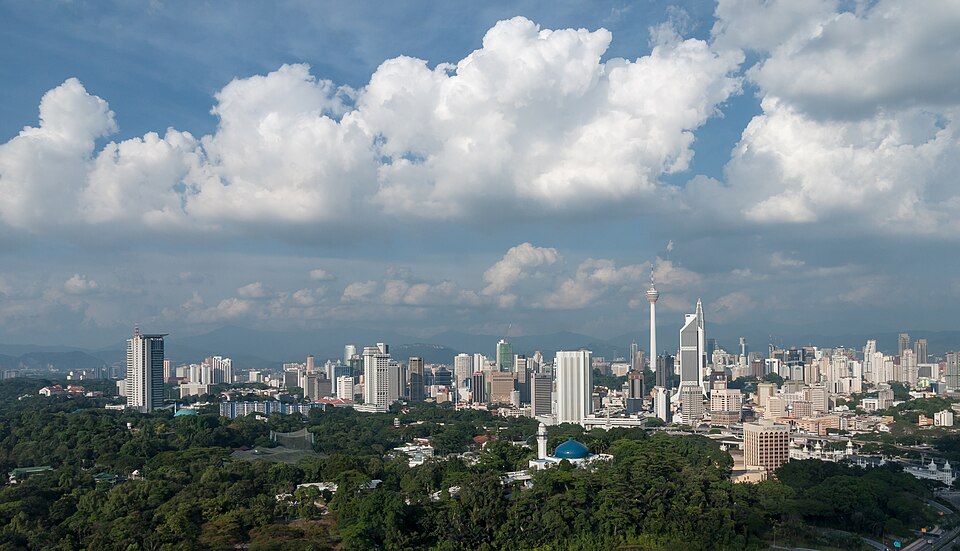
Kuala Lumpur is a capital and largest city of malaysia, with a population of roughly 9.0 million, and one of the markets in Malaysia where we build B2B and wholesale portals.
Businesses here work in banks, islamic finance and regional HQs; many are based around KLCC, Bangsar South and TRX.
Logistics are supported by KL International Airport, which matters when you promise customers fast delivery.
Malaysia has about 1.1 million MSMEs (Department of Statistics Malaysia). Malaysian shoppers are marketplace-savvy but increasingly buy directly from brands with FPX and e-wallet checkout. Multilingual Malay/English content and halal labelling help conversion.
For a business in Kuala Lumpur, the opportunity is to own the customer relationship: your own B2B ordering portal keeps your margin, your data and your brand, while marketplaces and social channels become additional sales routes instead of the only one.
Localised for Kuala Lumpur, not translated into it
A store that works in Kuala Lumpur respects local habits as well as local law. These are the details we configure first.
Currency and pricing
Everything a Kuala Lumpur shopper sees — price, tax, delivery fee, refund — is in MYR, written the local way.
Language and content
Storefront copy, product pages and emails can run in Malay, English and Chinese, with local date and number formats.
Local trust signals
We add the payment logos, courier names and policy pages shoppers in Kuala Lumpur recognise: FPX online banking and DuitNow QR and delivery through Pos Malaysia.
Domain, phone and contact
A .my domain (or your own) builds local trust and search relevance. Click-to-call and WhatsApp buttons use the +60 calling code so customers reach you without dialling errors.
Talent and partners nearby
With University of Malaya and Asia Pacific University close by, finding people to manage catalogues, content and support after launch is realistic in Kuala Lumpur.
Designed to your requirements, not a template
Your B2B ordering portal is planned, designed and coded for your business model — not adapted from someone else's — and it can ship with a customer or staff mobile app on day one.
Typical clients include FMCG distributors, industrial suppliers, electrical and hardware traders and medical and institutional suppliers. Categories that sell especially well online in Malaysia — fashion and modest wear, electronics, beauty and groceries — get catalogue structures and filters designed for them.
We start with a requirements meeting, show you a working demo within 24 hours, and only then propose scope, milestones and budget.
Core modules we build for Kuala Lumpur clients
These are the building blocks of a B2B ordering portal. We scope them with you, so you pay for what your Kuala Lumpur operation needs.
Business accounts
Registration, KYC and approval, company hierarchies, branches, buyers and approvers with their own permissions. Storefront language, imagery and navigation are set up for Kuala Lumpur shoppers and available in Malay and English.
Contract pricing
Price lists by customer, group or territory, quantity slabs, pack sizes, minimum order values and negotiated rates. Product data imports from your existing sheets or ERP, so Kuala Lumpur teams do not re-type thousands of items.
Quick and bulk ordering
SKU-code entry, spreadsheet upload, saved lists, re-order from history and scheduled repeat orders. Payment steps are built around FPX online banking, DuitNow QR and Touch 'n Go eWallet, the options shoppers here already trust.
Quotes and approvals
Request-for-quotation, counter-offers, purchase-order upload and multi-level approval before submission. Shipping rules can use Pos Malaysia, J&T Express and Ninja Van as well as your own delivery staff in Kuala Lumpur.
Credit and payments
Online payment, credit limits, pay-later terms, outstanding statements and payment reminders where approved. Multiple stock points in Malaysia are supported, so a Kuala Lumpur order ships from the nearest one.
Sales-team tools
Order on behalf of customers, territory assignment, visit notes and performance dashboards for representatives. Dashboards break sales down by product, customer and neighbourhood of Kuala Lumpur, so you see what to promote.
Industries in Kuala Lumpur we work with
Popular online categories in Malaysia include fashion and modest wear, electronics, beauty, groceries, home and baby products. Local demand in Kuala Lumpur is shaped by banks, islamic finance and regional HQs, so we often design catalogues and B2B ordering around those sectors. In Kuala Lumpur, we most often build B2B and wholesale portals for:
Wholesalers
For wholesalers, we usually start with contract pricing, then add ERP (SAP, Oracle, Microsoft Dynamics, Tally, Zoho) once orders are flowing.
FMCG distributors
Catalogue, pricing and fulfilment rules designed for FMCG distributors in Kuala Lumpur, connected to the systems you already use.
Industrial suppliers
Industrial suppliers get quick and bulk ordering plus credit and payments workflows tailored to their operations.
Electrical and hardware traders
We map how electrical and hardware traders sell today and digitise it end to end — from enquiry and order to payment, dispatch and repeat purchase.
Medical and institutional suppliers
For medical and institutional suppliers, we usually start with sales-team tools, then add credit and payment gateways once orders are flowing.
Dealer networks
Catalogue, pricing and fulfilment rules designed for dealer networks in Kuala Lumpur, connected to the systems you already use.
Getting paid online in Kuala Lumpur
Shoppers in Kuala Lumpur rarely abandon a cart over price alone — they leave when their usual method is missing. Here that means FPX online banking, DuitNow QR and Touch 'n Go eWallet, then GrabPay, Visa and Mastercard and Atome and ShopeePay Later.
We integrate suitable gateways and providers for your business category and merchant eligibility, handle payment status, failed-payment retries and refunds, and keep sensitive card data with the provider rather than on your servers. All amounts are shown in Malaysian ringgit (MYR).
Zone-based payment rules let you offer different options for KLCC than for outer parts of Kuala Lumpur.
- FPX online banking
- Atome and ShopeePay Later
- GrabPay
- Touch 'n Go eWallet
- DuitNow QR
- Visa and Mastercard
Delivery and fulfilment from Kuala Lumpur
Your B2B ordering portal can book shipments and share tracking with Pos Malaysia, J&T Express, Ninja Van, DHL eCommerce, GDEX and City-Link, or route orders to your own riders and stores across Kuala Lumpur.
We set up shipping zones, cut-off times, free-shipping thresholds, cash-collection rules and returns so the promise on the product page matches what your team can deliver.
Connectivity in the area — KL International Airport — makes regional and national dispatch from Kuala Lumpur practical.
Owning your channel in Malaysia
Selling in Kuala Lumpur through Shopee, Lazada and TikTok Shop gets you reach quickly, yet the buyer belongs to the platform, not to you.
Your B2B ordering portal becomes the hub: marketplaces and social shops become extra outlets fed from one catalogue, while repeat customers buy directly from you at better margins.
Tax, invoicing and compliance in Malaysia
On tax: Malaysia levies Sales and Service Tax (SST), with an expanded scope from July 2025; overseas digital-service providers must register for service tax.
On privacy we design around the Personal Data Protection Act 2010, amended in 2024 to add breach notification and data-portability duties; on consumer rights the store reflects the Consumer Protection Act 1999 and the Consumer Protection (Electronic Trade Transactions) Regulations.
Controls we implement include compliant invoices, consent capture, policy pages, restricted staff access and audit trails. Please confirm the final legal and tax position with a local adviser in Kuala Lumpur.
Mobile commerce in Kuala Lumpur
Phones carry most traffic in Malaysia. A dealer and sales-representative app lets buyers re-order in seconds, scan products, check statements and receive scheme announcements, while reps take orders at the counter even with patchy connectivity.
One backend serves the website and the apps, and the apps ship under your own Google Play and App Store accounts — so what you change once appears everywhere.
Order alerts, offers and abandoned-cart reminders go out on Kuala Lumpur time (UTC+8), in Malay and English if you want.
- Accounting and e-invoicing
- ERP (SAP, Oracle, Microsoft Dynamics, Tally, Zoho)
- BI and reporting tools
- Logistics and freight partners
- WhatsApp and SMS notifications
- CRM and lead management
- Credit and payment gateways
- Warehouse and inventory systems
Integrations above are examples; we connect any system that offers a suitable API, database access or approved import and export process.
From first demo to growth in Kuala Lumpur
Value first, depth later. For a B2B ordering portal serving Kuala Lumpur, the usual sequence looks like this:
| Phase | What goes live |
|---|---|
| Launch portal | Accounts, contract pricing, catalogue, ordering and ERP order sync. Configured for MYR, FPX online banking and Pos Malaysia from the start. |
| Automate | Quotes, approvals, credit, statements and notifications. |
| Expand | Dealer and sales-rep apps, analytics and new territories. Reviewed against how Kuala Lumpur customers actually buy. |
Success is measured on order-entry time, share of orders placed online, order accuracy, days sales outstanding, repeat-order frequency and sales-rep productivity — tracked on a dashboard you can see from launch day.
How Kuala Lumpur clients work with us
Kuala Lumpur runs on UTC+8, which is 2h 30m ahead of India (IST). With three 8-hour shifts we are available 24×7, so meetings, demos and urgent fixes happen in your working hours.
We work in English and can deliver storefront content in Malay. NDAs are signed on request, and you get a named project lead plus direct access to the engineers building your B2B ordering portal.
Our head office is in Chhapi, Gujarat, with an office in Hyderabad and representation in Nigeria, South Africa, Ethiopia and Zambia; Kuala Lumpur clients are served remotely with on-site workshops when the project needs them.