The case for an international e-commerce platform in Tabuk
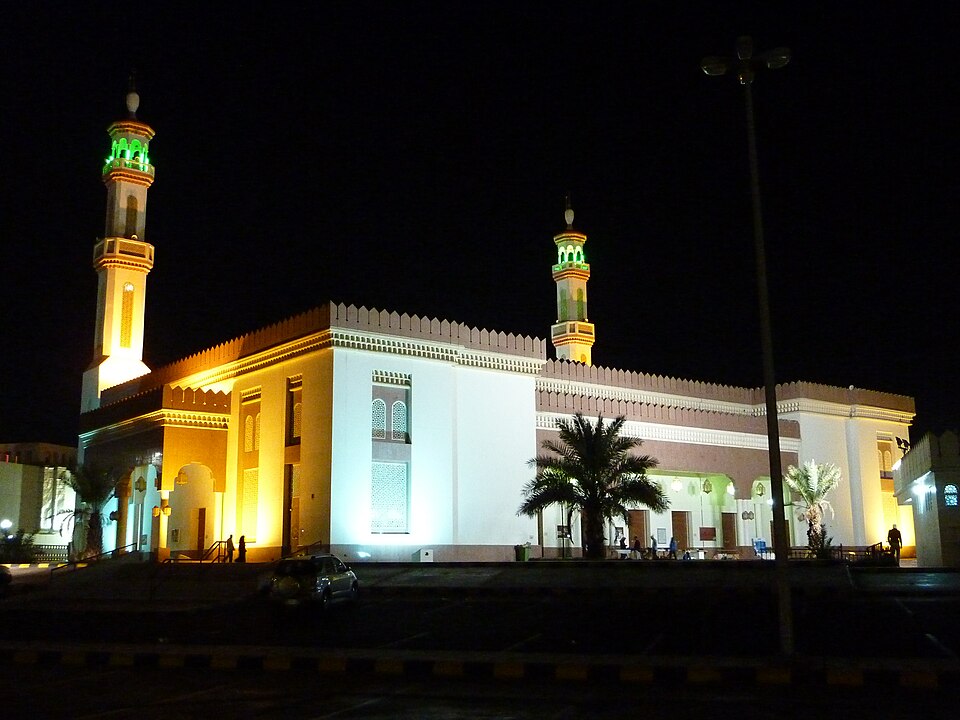
Tabuk is a capital of tabuk province, saudi arabia, home to about 886,000 people, and one of the markets in Saudi Arabia where we build international and multi-region stores.
Businesses here work in red sea tourism and agriculture; many are based around the city centre.
Logistics are supported by Prince Sultan bin Abdulaziz Airport, which matters when you promise customers fast delivery.
Saudi Arabia has more than 1.3 million small and medium enterprises (Monsha'at). Vision 2030 has made e-commerce a national priority, and Saudi Arabia is the largest online retail market in the GCC. Arabic-first, mobile-first stores with mada, Apple Pay and BNPL checkout are now the baseline expectation.
For a business in Tabuk, the opportunity is to own the customer relationship: your own international e-commerce platform keeps your margin, your data and your brand, while marketplaces and social channels become additional sales routes instead of the only one.
Local details we build into every Tabuk project
A store that works in Tabuk respects local habits as well as local law. These are the details we configure first.
Currency and pricing
Everything a Tabuk shopper sees — price, tax, delivery fee, refund — is in SAR, written the local way.
Language and content
Content can be produced in Arabic and English, so a Tabuk customer reads the store in the language they use at home.
Local trust signals
We add the payment logos, courier names and policy pages shoppers in Tabuk recognise: mada debit cards and Visa and Mastercard and delivery through SPL (Saudi Post).
Domain, phone and contact
A .sa domain (or your own) builds local trust and search relevance. Click-to-call and WhatsApp buttons use the +966 calling code so customers reach you without dialling errors.
Talent and partners nearby
Tabuk draws on University of Tabuk, which means plenty of local staff, interns and technology partners to run the store after launch.
Custom-built for how you sell in Tabuk
If you run a business in Tabuk and want to sell online, we build an e-commerce platform and mobile application to your exact requirements, from the first product page to the last delivery update.
Typical clients include D2C brands expanding abroad, manufacturers selling to distributors overseas, diaspora-focused retailers and tourism and gifting businesses. Categories that sell especially well online in Saudi Arabia — electronics and mobiles, fashion and modest wear, beauty and oud and groceries — get catalogue structures and filters designed for them.
We start with a requirements meeting, show you a working demo within 24 hours, and only then propose scope, milestones and budget.
Core modules we build for Tabuk clients
These are the building blocks of an international e-commerce platform. We scope them with you, so you pay for what your Tabuk operation needs.
Regional storefronts
Country or region sites with local language, content, currency, promotions and hreflang SEO. Reports show which products, customers and areas of Tabuk drive revenue.
Local payments
Market-specific cards, wallets, bank transfers, BNPL and cash methods through suitable providers. Pages, search filters and wording are tuned to how people in Tabuk look for products, in Arabic and English if your audience needs it.
Tax and duties
VAT, GST and sales-tax rules, tax-inclusive pricing, duties and landed-cost estimates where needed. Catalogues come in from spreadsheets, ERP exports or supplier feeds, so your Tabuk team keeps its current way of working.
Cross-border shipping
International couriers, regional warehouses, shipping zones, customs documents and returns. Payment steps are built around mada debit cards, Visa and Mastercard and Apple Pay and STC Pay, the options shoppers here already trust.
Compliance pages
Market-appropriate privacy notices, cookie consent, consumer terms and accessibility considerations. Couriers such as SPL (Saudi Post), Aramex and SMSA Express plug in alongside your own fleet for Tabuk orders.
Regional reporting
Sales, margin, conversion and marketing performance by country and currency. Inventory can sit in Tabuk, in a partner warehouse or across Saudi Arabia, with click-and-collect where customers want it.
Who we build for in Tabuk
Popular online categories in Saudi Arabia include electronics and mobiles, fashion and modest wear, beauty and oud, groceries, home appliances and gaming. Local demand in Tabuk is shaped by red sea tourism and agriculture, so we often design catalogues and B2B ordering around those sectors. In Tabuk, we most often build international and multi-region stores for:
Exporters
Catalogue, pricing and fulfilment rules designed for exporters in Tabuk, connected to the systems you already use.
D2C brands expanding abroad
D2C brands expanding abroad get local payments plus cross-border shipping workflows tailored to their operations.
Manufacturers selling to distributors overseas
We map how manufacturers selling to distributors overseas sell today and digitise it end to end — from enquiry and order to payment, dispatch and repeat purchase.
Diaspora-focused retailers
For diaspora-focused retailers, we usually start with compliance pages, then add translation management once orders are flowing.
Tourism and gifting businesses
Catalogue, pricing and fulfilment rules designed for tourism and gifting businesses in Tabuk, connected to the systems you already use.
Multi-country retail groups
Multi-country retail groups get regional reporting plus local payments workflows tailored to their operations.
Checkout and payment methods for Tabuk
An international e-commerce platform for Tabuk must support the way people here actually pay: mada debit cards, Visa and Mastercard, Apple Pay and STC Pay, Tabby and Tamara BNPL, SADAD bill payments and cash on delivery.
Gateway selection depends on your category and merchant approval; we connect the provider, reconcile payments, automate retries and refunds, and never store raw card data. Prices, taxes and refunds appear in Saudi riyal (SAR).
For Tabuk customers ordering from the city centre, cash-on-delivery and pay-on-pickup rules can be set per delivery zone.
- Visa and Mastercard
- Mada debit cards
- Apple Pay and STC Pay
- Tabby and Tamara BNPL
- Cash on delivery
- SADAD bill payments
Fulfilment options for Tabuk orders
Your international e-commerce platform can book shipments and share tracking with SPL (Saudi Post), Aramex, SMSA Express, J&T Express, Naqel and DHL, or route orders to your own riders and stores across Tabuk.
We set up shipping zones, cut-off times, free-shipping thresholds, cash-collection rules and returns so the promise on the product page matches what your team can deliver.
Connectivity in the area — Prince Sultan bin Abdulaziz Airport — makes regional and national dispatch from Tabuk practical.
Your own store alongside Amazon.sa and noon
Many Tabuk sellers already list on Amazon.sa, noon, Jarir, Extra, Nahdi and Salla and Zid storefronts. Those channels bring traffic, but they also take commission, control the customer relationship and change rules without notice.
Your international e-commerce platform becomes the hub: marketplaces and social shops become extra outlets fed from one catalogue, while repeat customers buy directly from you at better margins.
Rules Tabuk sellers must respect online
On tax: Saudi VAT is charged at 15% under ZATCA rules, and ZATCA e-invoicing (FATOORA) requires compliant electronic invoices for registered businesses.
On privacy we design around the Personal Data Protection Law (PDPL) enforced by SDAIA, which regulates consent, cross-border transfers and breach notification; on consumer rights the store reflects the E-Commerce Law and its implementing regulations from the Ministry of Commerce, which require Arabic disclosures, Maroof-style business identification and clear return terms.
Our job is the engineering: price display with tax, invoice numbering, cookie and marketing consent, return and terms pages, role-based access and logs. Legal and tax conclusions stay with your own adviser in Saudi Arabia.
Mobile commerce in Tabuk
Region-aware mobile apps can switch language, currency and payment options automatically while sharing one codebase and backend.
One backend serves the website and the apps, and the apps ship under your own Google Play and App Store accounts — so what you change once appears everywhere.
Order alerts, offers and abandoned-cart reminders go out on Tabuk time (UTC+3), in Arabic and English if you want.
- Tax engines
- Regional analytics
- Multi-currency payment providers
- ERP and accounting
- Marketplace feeds by country
- International couriers and 3PLs
- Translation management
- Geo-IP and consent platforms
Integrations above are examples; we connect any system that offers a suitable API, database access or approved import and export process.
A phased launch plan for Tabuk
Value first, depth later. For an international e-commerce platform serving Tabuk, the usual sequence looks like this:
| Phase | What goes live |
|---|---|
| First market | One new region with language, currency, payments, tax and shipping. Configured for SAR, mada debit cards and SPL (Saudi Post) from the start. |
| Multi-region | Additional countries, local promotions and marketplace feeds. |
| Optimise | Regional apps, warehouses and localisation improvements. Reviewed against how Tabuk customers actually buy. |
We track conversion by country, international order share, checkout completion by payment method, delivery time by region, return rate abroad and margin after duties and shipping on a live dashboard from day one, so Tabuk results are visible, not promised.
How Tabuk clients work with us
Tabuk runs on UTC+3, which is 2h 30m behind India (IST). With three 8-hour shifts we are available 24×7, so meetings, demos and urgent fixes happen in your working hours.
We work in English and can deliver storefront content in Arabic. NDAs are signed on request, and you get a named project lead plus direct access to the engineers building your international e-commerce platform.
Our head office is in Chhapi, Gujarat, with an office in Hyderabad and representation in Nigeria, South Africa, Ethiopia and Zambia; Tabuk clients are served remotely with on-site workshops when the project needs them.