Why Luba businesses are investing in manufacturer and distributor portals
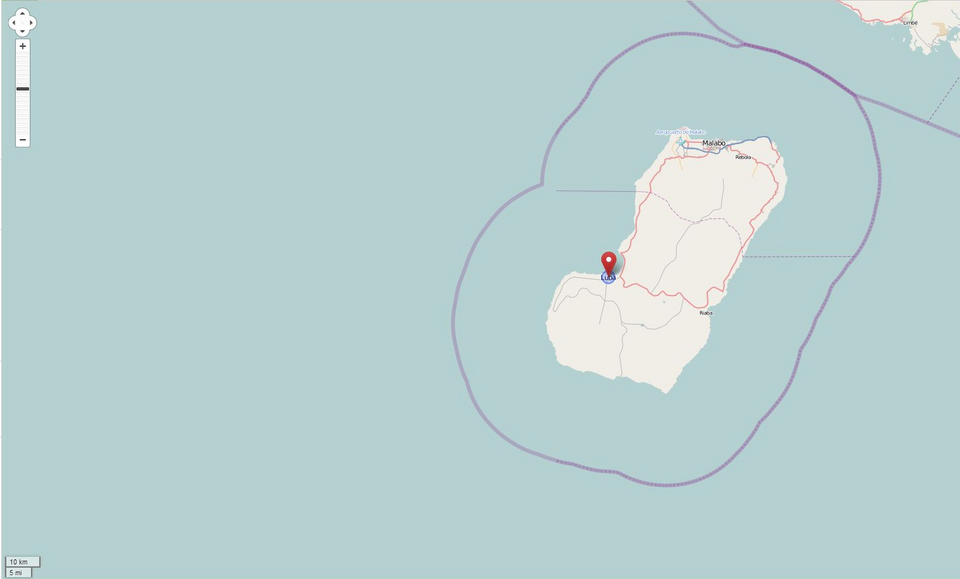
Luba is a second-largest town on bioko, equatorial guinea, where around 7,739 people live and shop, and one of the markets in Equatorial Guinea where we build manufacturer and distributor portals.
Key sectors include fishing, port services and trade, with business districts such as the Luba port and town centre.
Logistics are supported by The Malabo–Luba road, which matters when you promise customers fast delivery.
Equatorial Guinea’s oil wealth supports high-value purchasing power in Malabo and Bata, while online commerce is still early. Spanish, French and English-friendly stores for companies and expatriates are the opportunity.
That is why more companies in Luba are moving from phone, WhatsApp and spreadsheet orders to a proper manufacturer and dealer portal — one place where products, prices, payments, orders and customers are managed together.
What makes a Luba store feel local
Conversion in Luba depends on small local signals — the right currency, the right words and the right payment and courier names.
Currency and pricing
Everything a Luba shopper sees — price, tax, delivery fee, refund — is in XAF, written the local way.
Language and content
Content can be produced in Spanish, French and Portuguese, so a Luba customer reads the store in the language they use at home.
Local trust signals
Trust is local: familiar names such as Visa and Mastercard and bank transfer and Correos de Guinea Ecuatorial sit next to the buy button.
Domain, phone and contact
A .gq domain (or your own) builds local trust and search relevance. Click-to-call and WhatsApp buttons use the +240 calling code so customers reach you without dialling errors.
Talent and partners nearby
With Local colleges close by, finding people to manage catalogues, content and support after launch is realistic in Luba.
Designed to your requirements, not a template
If you run a business in Luba and want to sell online, we build an e-commerce platform and mobile application to your exact requirements, from the first product page to the last delivery update.
Typical clients include engineering component makers, electrical and automation brands, building-material manufacturers and auto-parts companies. Categories that sell especially well online in Equatorial Guinea — oil-sector supplies, electronics, food and fashion — get catalogue structures and filters designed for them.
We start with a requirements meeting, show you a working demo within 24 hours, and only then propose scope, milestones and budget.
What your manufacturer and dealer portal includes
These are the building blocks of a manufacturer and dealer portal. We scope them with you, so you pay for what your Luba operation needs.
Technical catalogue
Product families, models, variants, specification tables, comparison and application or industry filters. Checkout is configured for Visa and Mastercard, bank transfer and cash on delivery.
Document library
Datasheets, manuals, CAD drawings, certificates and price lists with public, registered or partner-only access. Shipping rules can use Correos de Guinea Ecuatorial, DHL and Local couriers as well as your own delivery staff in Luba.
Enquiries and RFQs
Project enquiries, quotation requests, lead routing to the right region and status tracking. Inventory can sit in Luba, in a partner warehouse or across Equatorial Guinea, with click-and-collect where customers want it.
Partner portal
Dealer and distributor sign-in, territory-based catalogues, protected pricing, schemes and targets. Revenue reports by product, repeat buyer and delivery area of Luba guide stock and marketing decisions.
Spares and service
Spare-part lookup by model or serial number, accessories, warranty registration and service requests. Pages, search filters and wording are tuned to how people in Luba look for products, in Spanish and French if your audience needs it.
Channel insight
Dashboards for partner orders, secondary sales, product interest and regional demand. Bulk import and sync tools mean the Luba team never re-keys stock, prices or descriptions by hand.
Getting paid online in Luba
Shoppers in Luba rarely abandon a cart over price alone — they leave when their usual method is missing. Here that means Visa and Mastercard, bank transfer and cash on delivery, then mobile money.
Provider approval, settlement time and fees differ by business type, so we shortlist gateways with you, then wire up status updates, refunds and reconciliation in XAF — card details stay with the provider.
Business buyers around the Luba port often want invoices or bank transfer, while consumers lean on Visa and Mastercard. We support both flows.
- Cash on delivery
- Visa and Mastercard
- Mobile money
- Bank transfer
Fulfilment options for Luba orders
Your manufacturer and dealer portal can book shipments and share tracking with Correos de Guinea Ecuatorial, DHL, Local couriers and Oil-sector logistics firms, or route orders to your own riders and stores across Luba.
Delivery rules can price by distance, weight, postcode or zone, offer same-day slots in dense areas, and switch on pickup points or click-and-collect where customers prefer them.
Connectivity in the area — The Malabo–Luba road — makes regional and national dispatch from Luba practical.
Selling online legally in Equatorial Guinea
Equatorial Guinea charges 15% VAT, with CEMAC customs rules.
On privacy we design around CEMAC and national ICT frameworks, with data-protection law developing; on consumer rights the store reflects general consumer-protection and commercial-code provisions.
Our job is the engineering: price display with tax, invoice numbering, cookie and marketing consent, return and terms pages, role-based access and logs. Legal and tax conclusions stay with your own adviser in Equatorial Guinea.
Luba sellers: marketplace plus your own store
Many Luba sellers already list on Facebook Marketplace, WhatsApp shops, Local classifieds and Amazon (cross-border). Those channels bring traffic, but they also take commission, control the customer relationship and change rules without notice.
NNT Mart gives you a channel you own: your domain, your customer list, your pricing and your brand. Where it helps, we connect product feeds and orders from marketplaces so stock stays in sync and your team works from one dashboard.
Industries in Luba we work with
Popular online categories in Equatorial Guinea include oil-sector supplies, electronics, food, fashion, building materials and cosmetics. Local demand in Luba is shaped by fishing, port services and trade, so we often design catalogues and B2B ordering around those sectors. In Luba, we most often build manufacturer and distributor portals for:
Machinery and equipment manufacturers
Catalogue, pricing and fulfilment rules designed for machinery and equipment manufacturers in Luba, connected to the systems you already use.
Engineering component makers
Engineering component makers get document library plus partner portal workflows tailored to their operations.
Electrical and automation brands
We map how electrical and automation brands sell today and digitise it end to end — from enquiry and order to payment, dispatch and repeat purchase.
Building-material manufacturers
For building-material manufacturers, we usually start with spares and service, then add dealer management systems once orders are flowing.
Auto-parts companies
Catalogue, pricing and fulfilment rules designed for auto-parts companies in Luba, connected to the systems you already use.
Importers and master distributors
Importers and master distributors get channel insight plus document library workflows tailored to their operations.
Add a mobile app for Luba customers
In Luba, shoppers browse on phones first. Dealer, field-sales and service-technician apps can scan QR codes on products, look up spares, register warranties and place orders from the shop floor or the customer site.
One backend serves the website and the apps, and the apps ship under your own Google Play and App Store accounts — so what you change once appears everywhere.
Push notifications can be timed to UTC+1 so offers reach Luba customers when they are awake, and the interface can run in Spanish and French.
- ERP and production planning
- E-invoicing and tax systems
- Warranty and service software
- Dealer management systems
- CRM and lead routing
- PIM and DAM for product data
- WhatsApp Business API
- Logistics partners
Integrations above are examples; we connect any system that offers a suitable API, database access or approved import and export process.
A phased launch plan for Luba
Value first, depth later. For a manufacturer and dealer portal serving Luba, the usual sequence looks like this:
| Phase | What goes live |
|---|---|
| Catalogue and enquiries | Technical catalogue, documents and RFQ capture with CRM routing. Configured for XAF, Visa and Mastercard and Correos de Guinea Ecuatorial from the start. |
| Partner portal | Dealer sign-in, protected pricing, ordering and ERP sync. |
| Service and apps | Spares, warranty, service requests and field apps. Reviewed against how Luba customers actually buy. |
Success is measured on qualified enquiries per month, quote-to-order conversion, dealer portal adoption, secondary-sales visibility, spare-part order accuracy and time to answer technical queries — tracked on a dashboard you can see from launch day.
Support hours and communication for Luba
Our team covers UTC+1 — 4h 30m behind India (IST) — through three 8-hour shifts, so a Luba client always reaches someone during the local working day.
Project communication is in English; storefront content can be produced in Portuguese, Spanish and French. You get a named lead, direct engineer access and an NDA if you ask.
Our head office is in Chhapi, Gujarat, with an office in Hyderabad and representation in Nigeria, South Africa, Ethiopia and Zambia; Luba clients are served remotely with on-site workshops when the project needs them.