
Why a shopping app makes sense for Iran
Iran is a market of about 92 million people where mobile commerce apps are growing fast, with Tehran as its capital.
Iran’s online shopping is large and domestic: Digikala, Divar and Instagram dominate and Shetab cards process payments. International cards and many global cloud tools are unavailable, so stores here need local gateways and in-country hosting.
That is why more companies in Iran are moving from phone, WhatsApp and spreadsheet orders to a proper shopping app — one place where products, prices, payments, orders and customers are managed together.
Why Iran businesses need their own online channel today
In Iran, buying starts on a phone: shoppers search, compare on Digikala and Divar and pay with Shetab domestic cards and Shaparak payment gateways (Zarinpal, IDPay). Iran alone has about 92 million people, and a business without its own shopping app hands those orders to whoever is easier to buy from.
Orders taken by phone, WhatsApp or spreadsheet cost real money: stock goes wrong, payments are chased by hand and sales stop when the shop closes. Electronics, fashion and home goods are among the strongest online categories in Iran, so the demand is already there to capture.
It is also a compliance move. VAT-ready invoices and records, and customer data handled under the Electronic Commerce Law and cybercrime rules, are far easier to keep right in one system than across notebooks and chat threads.
| Area | Offline and chat orders | With your own shopping app in Iran |
|---|---|---|
| Orders | Phone, WhatsApp, spreadsheets; open only in shop hours | Taken 24 hours a day, tracked end to end |
| Payments | Cash and manual follow-up | Shetab domestic cards and Shaparak payment gateways (Zarinpal, IDPay) and other local methods at checkout |
| Reach | Walk-ins and word of mouth | Search, social, Digikala and Divar and a link anyone can share |
| Records | Paper and chat history | VAT invoices, customer and stock data in one place |
Local details we build into every Iran project
Conversion in Iran depends on small local signals — the right currency, the right words and the right payment and courier names.
Currency and pricing
Prices, taxes, shipping and refunds are shown in Iranian rial (IRR), formatted the way Iran customers read them.
Language and content
We localise pages, emails and notifications into Persian (Farsi), Azerbaijani and Kurdish where your audience needs it.
Local trust signals
Badges for Shetab domestic cards and Shaparak payment gateways (Zarinpal, IDPay), Iran Post delivery and clear return terms reassure first-time buyers in Iran.
Domain, phone and contact
Using .ir where it suits you signals a local business to shoppers and search engines. Contact buttons are pre-set with +98, so a customer in Iran taps once to call or message.
Designed to your requirements, not a template
Iran businesses tell us what they sell and how they want to sell it; our engineers turn that into a custom shopping app, an admin system and a mobile app shaped around their operations.
In Iran we typically work with retail brands, grocery and pharmacy chains, restaurants and cloud kitchens and distributors with dealer networks, and with sellers in categories such as electronics, fashion, home goods and food and saffron that have strong online demand in Iran.
Before any commitment you get a free requirements meeting, a demo built on your use case and a proposal priced to your budget.
What to build first for your Iran business
Retail brands, grocery and pharmacy chains and restaurants and cloud kitchens in Iran usually get the fastest return by launching the journeys that bring in orders first, then adding depth. The order we recommend:
- MVP app: Core shopping, checkout, order tracking and push notifications. Set up for IRR, Shetab domestic cards and Iran Post.
- Engage: Loyalty, referrals, personalised offers and deep links.
- Extend: Dealer, delivery and admin apps on the same backend.
What your shopping app includes
Each module below is configured — or custom-developed — to your requirements. You choose what launches first and what follows in later phases.
Customer shopping app
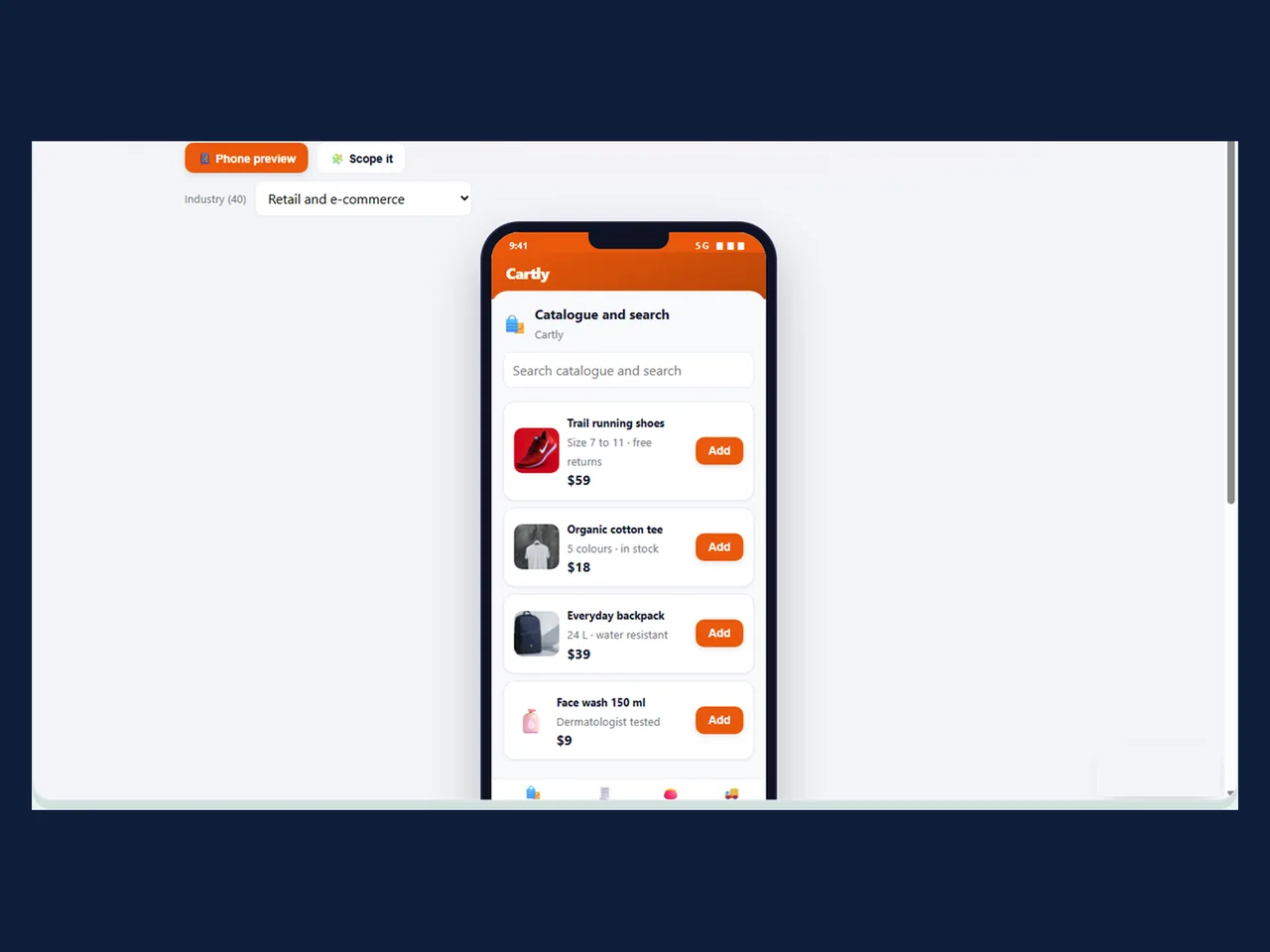
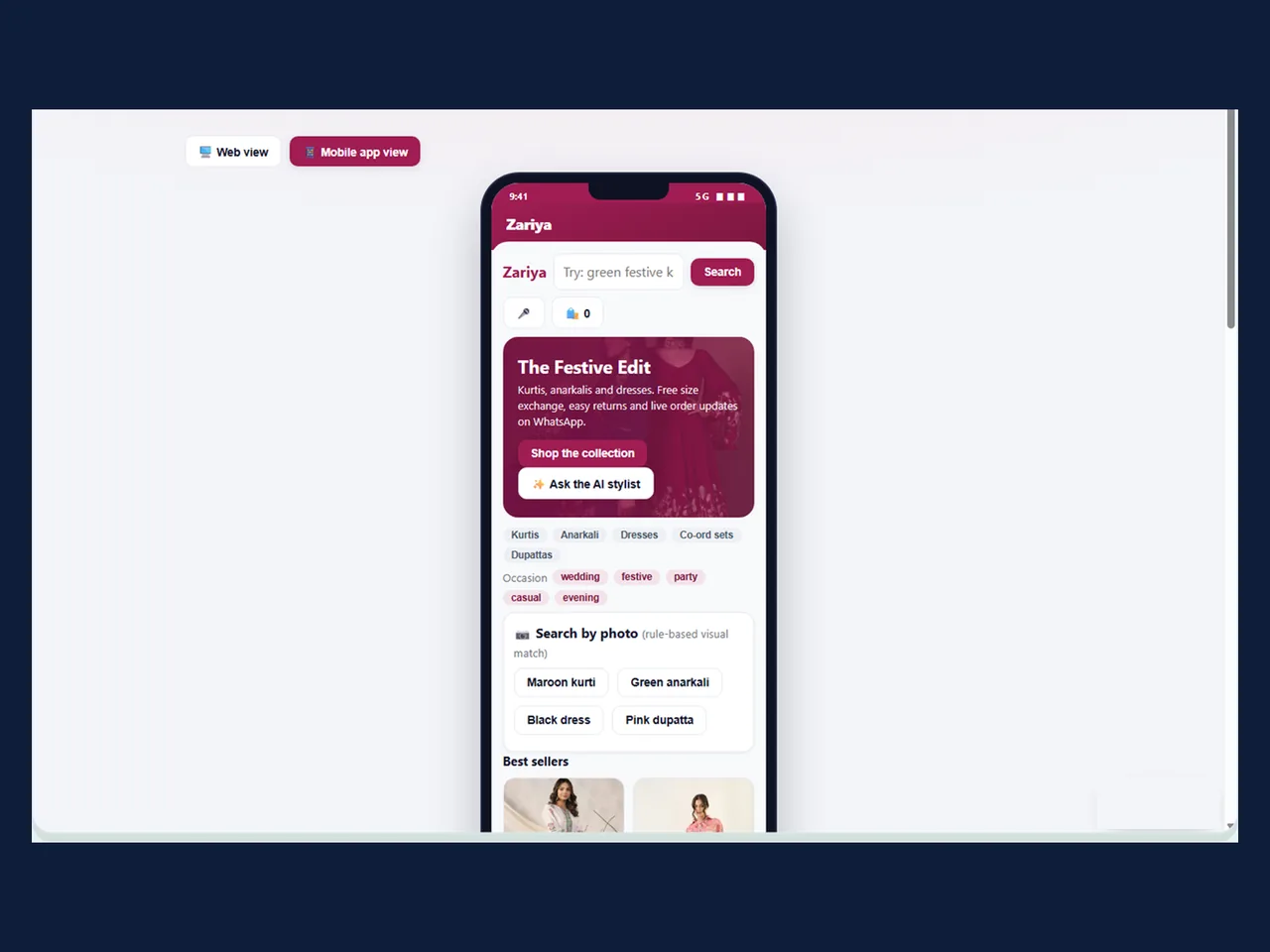
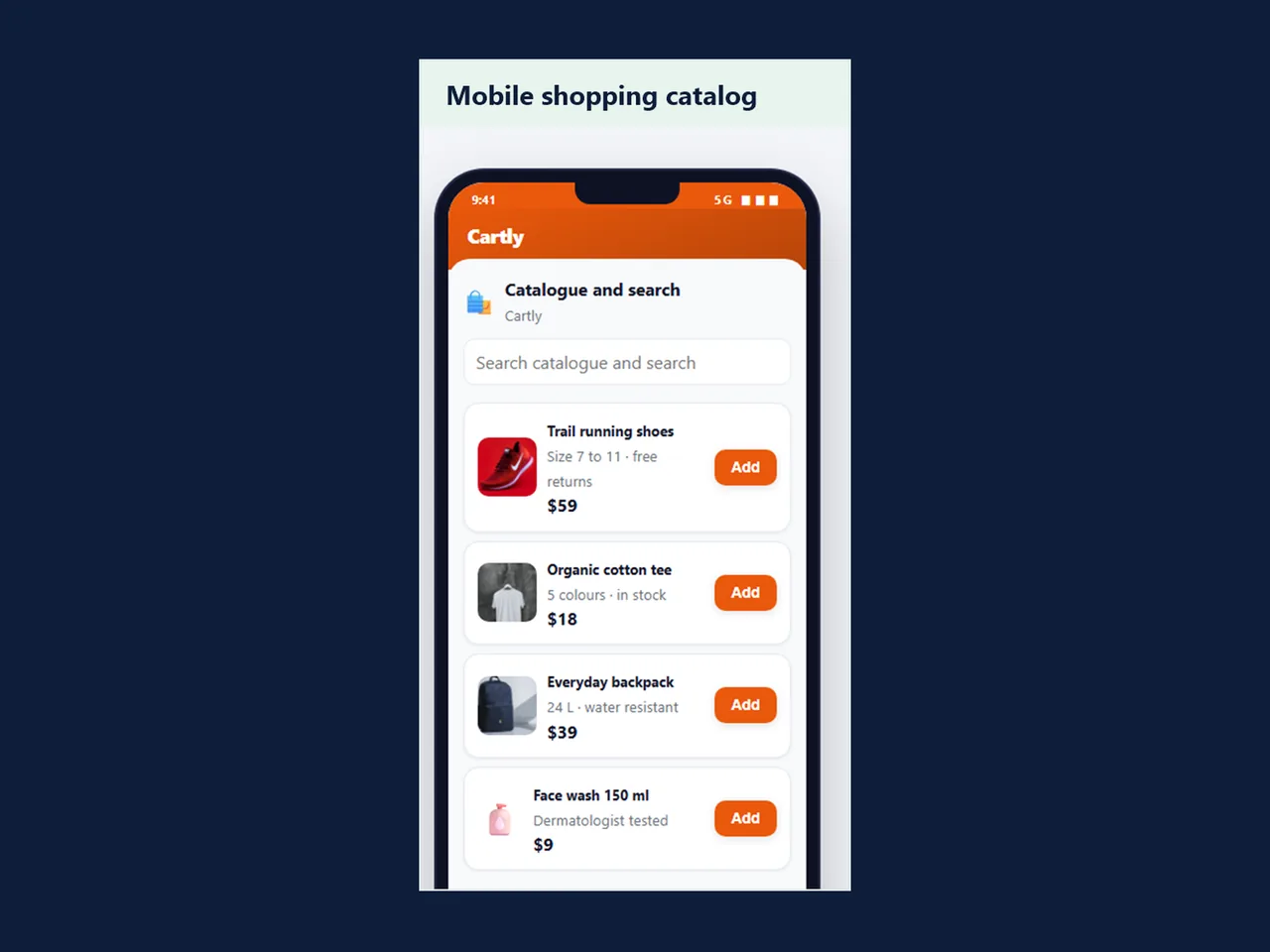
Browse, search, wish-lists, cart, wallet and UPI or card checkout, order tracking and push offers. Content and design can follow how customers in Iran search and buy, including Persian (Farsi) and Azerbaijani where you need it.
Dealer and B2B app
Account pricing, quick re-order, statements, schemes and barcode scanning for trade buyers. Bulk import and sync tools mean the Iran team never re-keys stock, prices or descriptions by hand.
Delivery partner app
Assigned orders, route navigation, proof of delivery, COD collection and status updates. Checkout is configured for Shetab domestic cards, Shaparak payment gateways (Zarinpal, IDPay) and Shatel and mobile wallets.
Store and admin app
Order alerts, stock updates, price changes and sales snapshots for owners and managers. Couriers such as Iran Post, Tipax and Mahex plug in alongside your own fleet for Iran orders.
Engagement
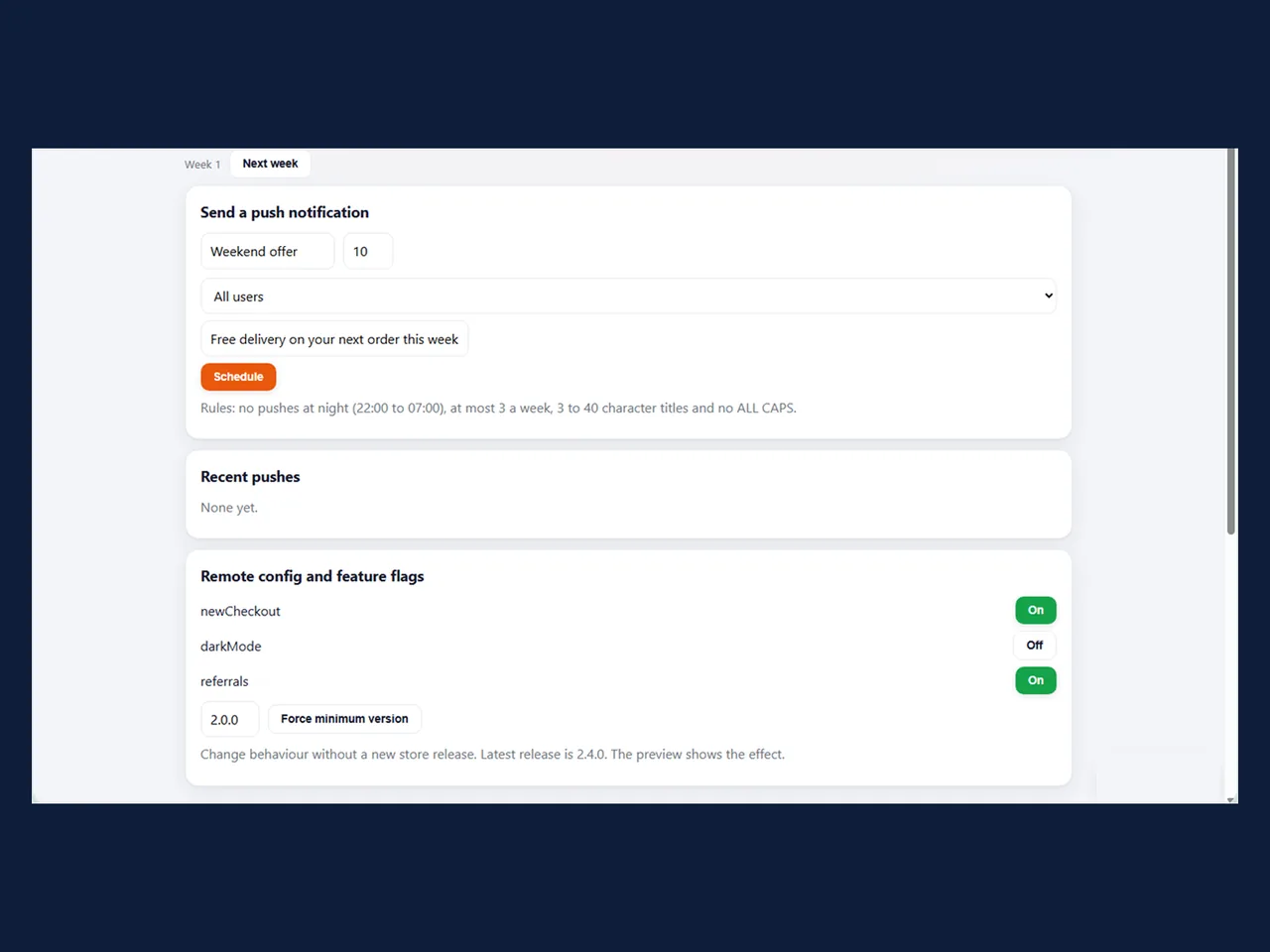
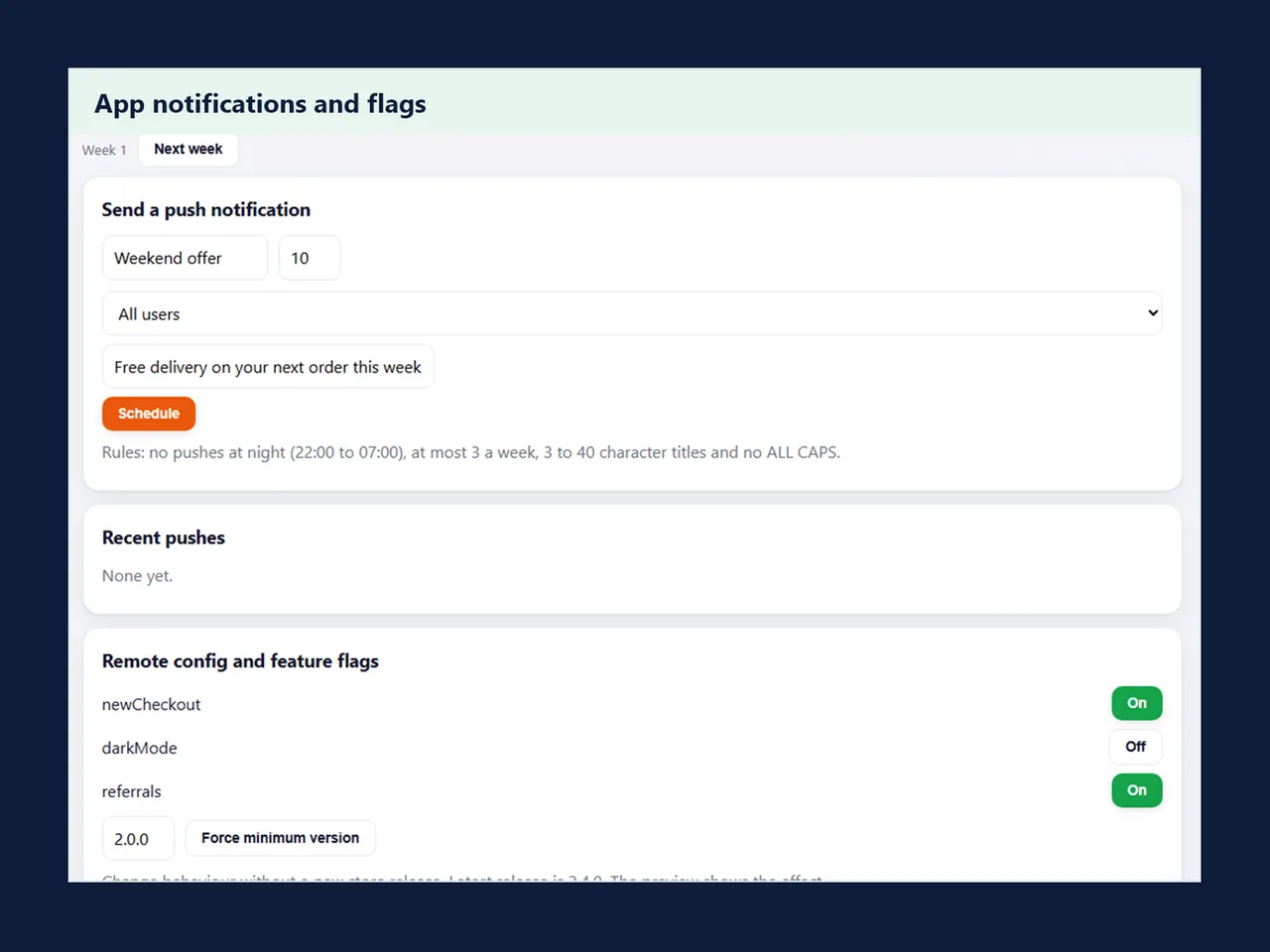
Segmented push notifications, deep links, in-app banners, loyalty and referral programmes. Multiple stock points in Iran are supported, so a Iran order ships from the nearest one.
Performance and offline
Fast native-feel UI, image caching, offline cart and graceful handling of poor networks. Revenue reports by product, repeat buyer and delivery area of Iran guide stock and marketing decisions.
What businesses in Iran ask us for
Businesses in Iran search for these in different words. Each one is something NNT Mart designs, builds and supports:
Ecommerce app development in Iran
Browse, search, wish-lists, cart, wallet and UPI or card checkout, order tracking and push offers. For Iran, prices, tax and invoices are in IRR and VAT-ready.
Shopping app development company in Iran
Account pricing, quick re-order, statements, schemes and barcode scanning for trade buyers. Built for Iran: Shetab domestic cards and Shaparak payment gateways payments and Iran Post delivery.
Mobile commerce app in Iran
Assigned orders, route navigation, proof of delivery, COD collection and status updates. In Iran it takes Shetab domestic cards at checkout and ships through Iran Post.
Android and iOS shopping app in Iran
Order alerts, stock updates, price changes and sales snapshots for owners and managers. For Iran, prices, tax and invoices are in IRR and VAT-ready.
Flutter ecommerce app in Iran
Segmented push notifications, deep links, in-app banners, loyalty and referral programmes. Built for Iran: Shetab domestic cards and Shaparak payment gateways payments and Iran Post delivery.
Grocery delivery app development in Iran
Fast native-feel UI, image caching, offline cart and graceful handling of poor networks. In Iran it takes Shetab domestic cards at checkout and ships through Iran Post.
Dealer ordering app in Iran
Browse, search, wish-lists, cart, wallet and UPI or card checkout, order tracking and push offers. For Iran, prices, tax and invoices are in IRR and VAT-ready.
Ecommerce mobile app cost in Iran
Account pricing, quick re-order, statements, schemes and barcode scanning for trade buyers. Built for Iran: Shetab domestic cards and Shaparak payment gateways payments and Iran Post delivery.
What a shopping app gives your Iran business
Here is what changes once the shopping app is live:
Keep the customer and the margin
Orders that come through your own shopping app keep your pricing, brand and customer list, instead of paying commission on Digikala and Divar for every sale.
Sell round the clock to Iran
Customers order and pay at any hour, including evenings and weekends, with Shetab domestic cards and Shaparak payment gateways (Zarinpal, IDPay) at checkout, so sales no longer depend on shop hours.
Run the business from one place
Customer shopping app and dealer and B2B app sit in one admin, connected to commerce APIs and headless backends, so the team stops re-typing orders and stock.
See what works
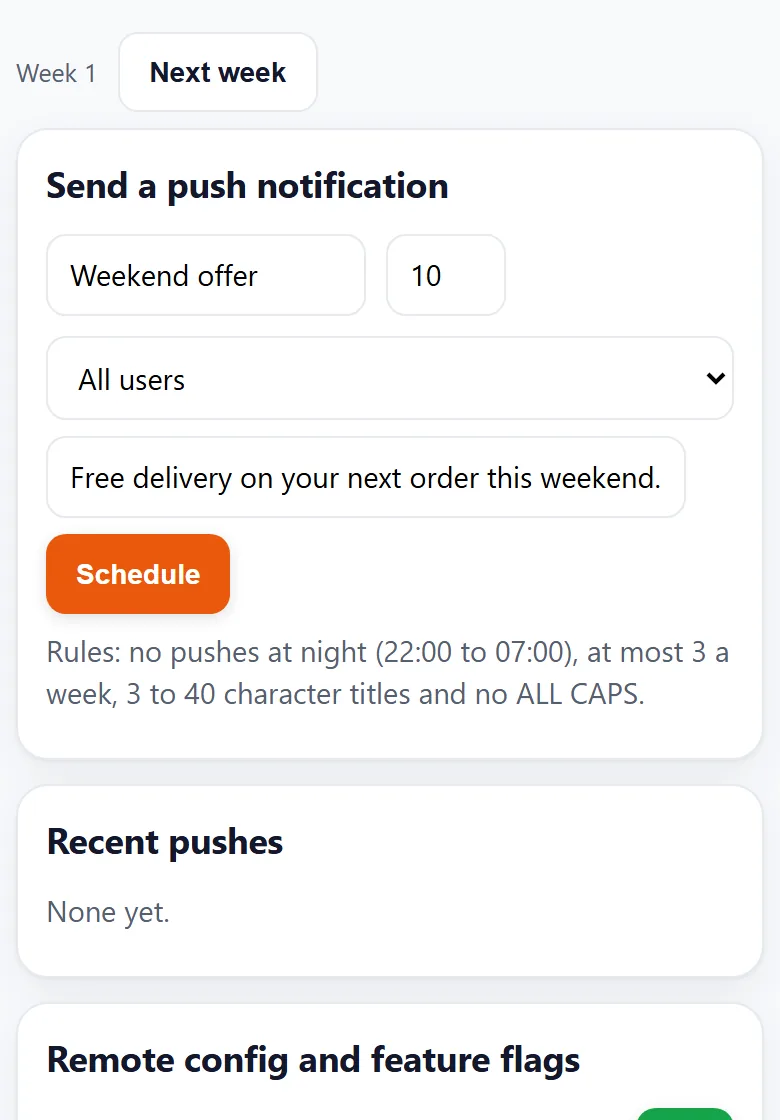
A live dashboard tracks app installs and active users, app conversion rate and push-notification click rate, so Iran decisions on stock, offers and spend come from numbers, not guesses.
A place on customers' home screens
A branded Android and iOS app puts your shop on the home screen, with push alerts timed to UTC+3:30 and one-tap reorder.
Be found by search and AI assistants
Fast pages, product and FAQ schema, a sitemap and direct-answer content let Google and AI assistants read, quote and recommend your shopping app when Iran customers ask.
Take orders on WhatsApp and the app
Customers in Iran can start an order from a link, WhatsApp or the mobile app and finish it in one checkout, so no enquiry is lost in a chat thread.
Own the technology
After final payment you receive 100% of the source code, design files and documentation, with a 90-day warranty, so growth never depends on a licence you cannot move.
Payments customers in Iran expect
A shopping app for Iran must support the way people here actually pay: Shetab domestic cards, Shaparak payment gateways (Zarinpal, IDPay), Shatel and mobile wallets, cash on delivery and bank transfer.
Gateway selection depends on your category and merchant approval; we connect the provider, reconcile payments, automate retries and refunds, and never store raw card data. Prices, taxes and refunds appear in Iranian rial (IRR).
- Shatel and mobile wallets
- Cash on delivery
- Shaparak payment gateways (Zarinpal, IDPay)
- Shetab domestic cards
- Bank transfer
Fulfilment options for Iran orders
Your shopping app can book shipments and share tracking with Iran Post, Tipax, Mahex, Snapp! Express, Alopeyk and Chapar, or route orders to your own riders and stores.
Delivery rules can price by distance, weight, postcode or zone, offer same-day slots in dense areas, and switch on pickup points or click-and-collect where customers prefer them.
Rules Iran sellers must respect online
For Iran sellers, tax first: Iran charges 10% VAT (value-added tax) with e-commerce sellers registering through the Moodian tax system for electronic invoices.
On privacy we design around the Electronic Commerce Law and cybercrime rules; data-protection rules are not consolidated in a single law; on consumer rights the store reflects the Electronic Commerce Law (2003) and the Consumer Rights Protection Law.
Controls we implement include compliant invoices, consent capture, policy pages, restricted staff access and audit trails. Please confirm the final legal and tax position with a local adviser.
Owning your channel in Iran
Digikala, Divar and Basalam are where many shoppers in Iran start, which is why sellers list there. The trade-off is commission, limited branding and rules the platform can change overnight.
With your own shopping app you keep the customer data, set the offers and the packaging, and still push stock to marketplaces from a single admin.
Who we build for in Iran
Popular online categories in Iran include electronics, fashion, home goods, food and saffron, carpets and crafts and cosmetics. In Iran, we most often build mobile commerce apps for:
Retail brands
For retail brands, we usually start with dealer and B2B app, then add commerce APIs and headless backends once orders are flowing.
Grocery and pharmacy chains
Catalogue, pricing and fulfilment rules designed for grocery and pharmacy chains in Iran, connected to the systems you already use.
Restaurants and cloud kitchens
Restaurants and cloud kitchens get delivery partner app plus engagement workflows tailored to their operations.
Distributors with dealer networks
We map how distributors with dealer networks sell today and digitise it end to end — from enquiry and order to payment, dispatch and repeat purchase.
D2C start-ups
For D2C start-ups, we usually start with performance and offline, then add analytics and crash reporting once orders are flowing.
Marketplace operators
Catalogue, pricing and fulfilment rules designed for marketplace operators in Iran, connected to the systems you already use.
Mobile commerce in Iran
Every app is published under your own Google Play and Apple developer accounts, with crash reporting, analytics and release management included.
For shopping app development company in Iran: one team builds the Android and iOS shopping app and the store behind it, and the ecommerce mobile app cost depends on your screens, integrations and team size.
One backend serves the website and the apps, and the apps ship under your own Google Play and App Store accounts — so what you change once appears everywhere.
Order alerts, offers and abandoned-cart reminders go out on Iran time (UTC+3:30), in Persian (Farsi) and Azerbaijani if you want.
- Analytics and crash reporting
- Payment SDKs and wallets
- Maps and location services
- Barcode and QR scanning
- Customer support chat
- Commerce APIs and headless backends
- Firebase and push messaging
- Social login
Integrations above are examples; we connect any system that offers a suitable API, database access or approved import and export process.
Launch roadmap and success metrics
We launch the journeys that create value first, then add depth. A typical roadmap for a shopping app in Iran:
| Phase | What goes live |
|---|---|
| MVP app | Core shopping, checkout, order tracking and push notifications. Configured for IRR, Shetab domestic cards and Iran Post from the start. |
| Engage | Loyalty, referrals, personalised offers and deep links. |
| Extend | Dealer, delivery and admin apps on the same backend. Reviewed against how Iran customers actually buy. |
Success is measured on app installs and active users, app conversion rate, push-notification click rate, crash-free sessions, store rating and share of revenue from app — tracked on a dashboard you can see from launch day.
Time zones, language and support
Iran runs on UTC+3:30, which is 2h behind India (IST). With three 8-hour shifts we are available 24×7, so meetings, demos and urgent fixes happen in your working hours.
We work in English and can deliver storefront content in Persian. NDAs are signed on request, and you get a named project lead plus direct access to the engineers building your shopping app.
Our head office is in Chhapi, Gujarat, with an office in Hyderabad and representation in Nigeria, South Africa, Ethiopia and Zambia; clients in Iran are served remotely with on-site workshops when the project needs them.