Why a shopping app makes sense for Tripoli
Tripoli is a commercial centre in Lebanon where around 228,000 people live and shop, and one of the places where we build mobile commerce apps for local businesses.
Key sectors include port logistics, manufacturing, trade and food, with business districts such as the Tripoli Special Economic Zone and the Al-Mina district.
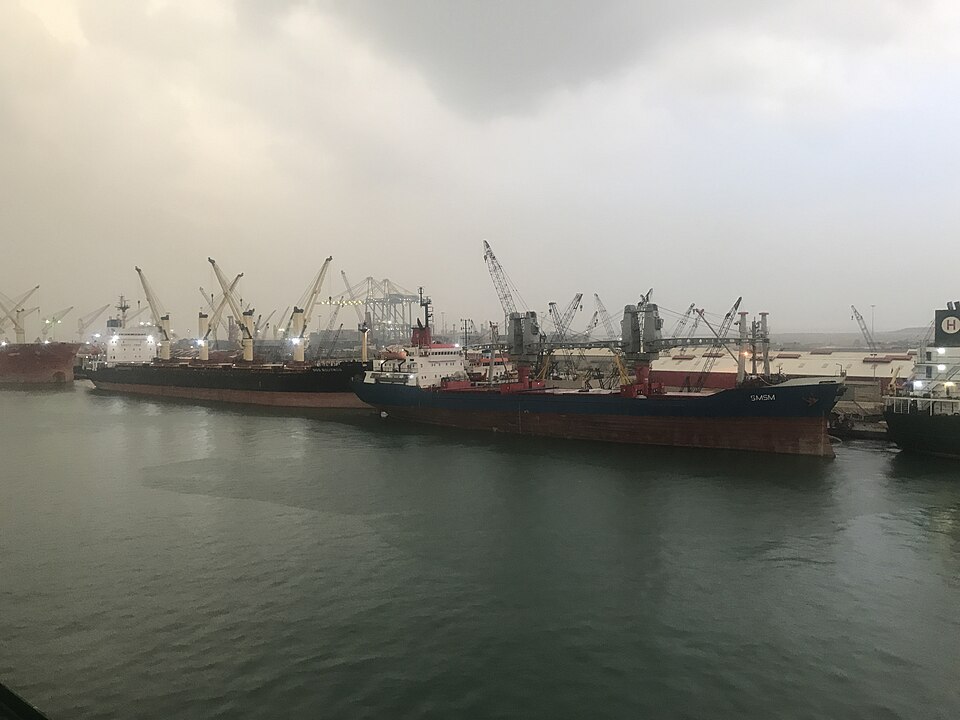
Logistics are supported by Port of Tripoli and the north coastal highway, which matters when you promise customers fast delivery.
Lebanese businesses are digital-savvy and entrepreneurial, and a large diaspora buys gifts and products for relatives. Dollar pricing, strong delivery apps and wallet payments define successful stores.
Shoppers and trade buyers in Tripoli already compare options on their phones; a shopping app that loads fast, shows accurate stock and accepts Visa and Mastercard (fresh-dollar accounts) turns that research into orders.
Local details we build into every Tripoli project
Conversion in Tripoli depends on small local signals — the right currency, the right words and the right payment and courier names.
Currency and pricing
The store speaks Lebanese pound: LBP amounts from product page to invoice, so Tripoli buyers never convert in their heads.
Language and content
Content can be produced in Arabic, French and English, so a Tripoli customer reads the store in the language they use at home.
Local trust signals
Trust is local: familiar names such as Visa and Mastercard (fresh-dollar accounts) and Whish Money and Liban Post sit next to the buy button.
Domain, phone and contact
A .lb domain (or your own) builds local trust and search relevance. Contact buttons are pre-set with +961, so a customer in Tripoli taps once to call or message.
Talent and partners nearby
With University of Balamand and the Lebanese University close by, finding people to manage catalogues, content and support after launch is realistic in Tripoli.
Designed to your requirements, not a template
We do not hand Tripoli businesses a ready-made theme: we study how you sell, then build the online platform and Android/iOS app your customers and staff actually need.
Typical clients include grocery and pharmacy chains, restaurants and cloud kitchens, distributors with dealer networks and D2C start-ups. Categories that sell especially well online in Lebanon — fashion, electronics, food and dining and cosmetics — get catalogue structures and filters designed for them.
Before any commitment you get a free requirements meeting, a demo built on your use case and a proposal priced to your budget.
Core modules we build for Tripoli clients
Nothing here is fixed: modules are switched on, reshaped or built from scratch around how your Tripoli business sells.
Customer shopping app
Browse, search, wish-lists, cart, wallet and UPI or card checkout, order tracking and push offers. Payment steps are built around Visa and Mastercard (fresh-dollar accounts), Whish Money and OMT Pay, the options shoppers here already trust.
Dealer and B2B app
Account pricing, quick re-order, statements, schemes and barcode scanning for trade buyers. Delivery can be booked through Liban Post, Aramex and DHL or dispatched by your own riders around Tripoli.
Delivery partner app
Assigned orders, route navigation, proof of delivery, COD collection and status updates. Inventory can sit in Tripoli, in a partner warehouse or across Lebanon, with click-and-collect where customers want it.
Store and admin app
Order alerts, stock updates, price changes and sales snapshots for owners and managers. Dashboards break sales down by product, customer and neighbourhood of Tripoli, so you see what to promote.
Engagement
Segmented push notifications, deep links, in-app banners, loyalty and referral programmes. Storefront language, imagery and navigation are set up for Tripoli shoppers and available in Arabic and French.
Performance and offline
Fast native-feel UI, image caching, offline cart and graceful handling of poor networks. Catalogues come in from spreadsheets, ERP exports or supplier feeds, so your Tripoli team keeps its current way of working.
Businesses that use NNT Mart in Tripoli
Popular online categories in Lebanon include fashion, electronics, food and dining, cosmetics, jewellery and home design. Local demand in Tripoli is shaped by port logistics, manufacturing, trade and food, so we often design catalogues and B2B ordering around those sectors. In Tripoli, we most often build mobile commerce apps for:
Retail brands
Catalogue, pricing and fulfilment rules designed for retail brands in Tripoli, connected to the systems you already use.
Grocery and pharmacy chains
Grocery and pharmacy chains get dealer and B2B app plus store and admin app workflows tailored to their operations.
Restaurants and cloud kitchens
We map how restaurants and cloud kitchens sell today and digitise it end to end — from enquiry and order to payment, dispatch and repeat purchase.
Distributors with dealer networks
For distributors with dealer networks, we usually start with engagement, then add maps and location services once orders are flowing.
D2C start-ups
Catalogue, pricing and fulfilment rules designed for D2C start-ups in Tripoli, connected to the systems you already use.
Marketplace operators
Marketplace operators get performance and offline plus dealer and B2B app workflows tailored to their operations.
How Tripoli customers pay online
Checkout is where most online sales are won or lost. In Lebanon, customers expect to pay with Visa and Mastercard (fresh-dollar accounts), Whish Money and OMT Pay, and many also look for cash on delivery in USD, Apple Pay and Google Pay and PayPal.
Gateway selection depends on your category and merchant approval; we connect the provider, reconcile payments, automate retries and refunds, and never store raw card data. Prices, taxes and refunds appear in Lebanese pound (LBP).
Zone-based payment rules let you offer different options for the Tripoli Special Economic Zone than for outer parts of Tripoli.
- Visa and Mastercard (fresh-dollar accounts)
- Whish Money
- PayPal
- OMT Pay
- Cash on delivery in USD
- Apple Pay and Google Pay
Fulfilment options for Tripoli orders
Your shopping app can book shipments and share tracking with Liban Post, Aramex, DHL, Toters, Wakilni and Wishbox, or route orders to your own riders and stores across Tripoli.
We set up shipping zones, cut-off times, free-shipping thresholds, cash-collection rules and returns so the promise on the product page matches what your team can deliver.
Connectivity in the area — Port of Tripoli and the north coastal highway — makes regional and national dispatch from Tripoli practical.
Your own store alongside Toters and Talabat
Many Tripoli sellers already list on Toters, Talabat, Zomato Lebanon, Cars.lb, Opensooq and Instagram boutiques. Those channels bring traffic, but they also take commission, control the customer relationship and change rules without notice.
NNT Mart gives you a channel you own: your domain, your customer list, your pricing and your brand. Where it helps, we connect product feeds and orders from marketplaces so stock stays in sync and your team works from one dashboard.
Rules Tripoli sellers must respect online
For Tripoli sellers, tax first: Lebanon charges 11% VAT; since the financial crisis, businesses commonly price in US dollars while official rules specify Lebanese pounds.
Customer data is handled with Law No. 81/2018 on Electronic Transactions and Personal Data, which sets consent and data-processing duties in mind, and the storefront follows the Consumer Protection Law No. 659/2005 and the Electronic Transactions Law.
Controls we implement include compliant invoices, consent capture, policy pages, restricted staff access and audit trails. Please confirm the final legal and tax position with a local adviser in Tripoli.
Mobile commerce in Tripoli
Phones carry most traffic in Lebanon. Every app is published under your own Google Play and Apple developer accounts, with crash reporting, analytics and release management included.
Apps are published under your own developer accounts and share the same backend as your shopping app, so offers, stock and orders are always consistent between web and mobile.
Push notifications can be timed to UTC+3 so offers reach Tripoli customers when they are awake, and the interface can run in Arabic and French.
- Analytics and crash reporting
- Maps and location services
- Barcode and QR scanning
- Customer support chat
- Payment SDKs and wallets
- Social login
- Commerce APIs and headless backends
- Firebase and push messaging
Integrations above are examples; we connect any system that offers a suitable API, database access or approved import and export process.
From first demo to growth in Tripoli
We launch the journeys that create value first, then add depth. A typical roadmap for a shopping app in Tripoli:
| Phase | What goes live |
|---|---|
| MVP app | Core shopping, checkout, order tracking and push notifications. Configured for LBP, Visa and Mastercard (fresh-dollar accounts) and Liban Post from the start. |
| Engage | Loyalty, referrals, personalised offers and deep links. |
| Extend | Dealer, delivery and admin apps on the same backend. Reviewed against how Tripoli customers actually buy. |
We track app installs and active users, app conversion rate, push-notification click rate, crash-free sessions, store rating and share of revenue from app on a live dashboard from day one, so Tripoli results are visible, not promised.
Support hours and communication for Tripoli
Our team covers UTC+3 — 2h 30m behind India (IST) — through three 8-hour shifts, so a Tripoli client always reaches someone during the local working day.
Project communication is in English; storefront content can be produced in Arabic. You get a named lead, direct engineer access and an NDA if you ask.
Our head office is in Chhapi, Gujarat, with an office in Hyderabad and representation in Nigeria, South Africa, Ethiopia and Zambia; Tripoli clients are served remotely with on-site workshops when the project needs them.