
Skip to content
NNT Mart by N&T Software
Solutions
Markets
Live demosMobile AppsContact
N&T Software
Get a free demo

Custom E-Commerce Development · Tehran, Iran

Custom E-Commerce Development in Tehran, Iran

Looking for custom ecommerce development in Tehran, Iran? NNT Mart designs and develops a custom custom e-commerce platform and a matching Android/iOS app for businesses in Tehran, Iran, covering discovery and business-process analysis; user roles, journeys and permission modelling. Tehran is the capital and largest city of Iran, home to about 8.7 million people. Checkout supports Shetab domestic cards, Shaparak payment gateways (Zarinpal, IDPay), delivery runs through Iran Post, and invoicing is VAT-ready while customer data follows the Electronic Commerce Law and cybercrime rules. Our team works remotely from India with working hours arranged to overlap yours, shows a working demo within 24 hours and hands over full source-code ownership with a 90-day warranty. Rates are US$15–40 per hour, depending on your budget and the team members on the project.

  • Web platform + Android/iOS app
  • Shetab domestic cards and Shaparak payment gateways (Zarinpal, IDPay)
  • Delivery via Iran Post
  • Demo within 24 hours
Cloud servers hosting a custom e-commerce platform — Tehran

Quick answer

Who builds a custom e-commerce platform in Tehran, Iran?

NNT Mart, the e-commerce platform of N&T Software, builds custom custom e-commerce platforms for businesses in Tehran, Iran. It serves 188 countries with custom builds, full source-code ownership and a 90-day warranty. Here it supports Shetab domestic cards and Iran Post delivery, quotes in IRR, and demos within 24 hours.

Reviewed by Shahnavaz Syed, Chief Operating Officer (COO) · Last updated

Pricing and team

How does N&T Software price custom e-commerce platform in Tehran, Iran, and who does the work?

N&T Software works on a fixed-cost basis, an hourly basis or with dedicated developers for clients in Tehran, Iran, as per the client's budget. Pricing starts at USD 15–40 per hour; final charges and timeline are set after we confirm your requirements, and depend on your budget and the team members assigned to the project.

COO Shahnavaz Syed leads a DBA team, development team and hosting team with 15+ years of experience each, so your custom e-commerce platform project in Tehran, Iran is designed, built and hosted by the same accountable group.

Live demo

Try a live custom e-commerce platform demo

Use it yourself, on sample data: nothing is stored and no payment is taken. This is a demo built by NNT Mart to show how the product works; your Tehran project is built to your own requirements.

See it before you decide

A custom e-commerce platform for Tehran: the screens your customers and team use

Real screens from our live custom e-commerce platform demo, shown for a business in Tehran, Iran. Open the demo to try each one.

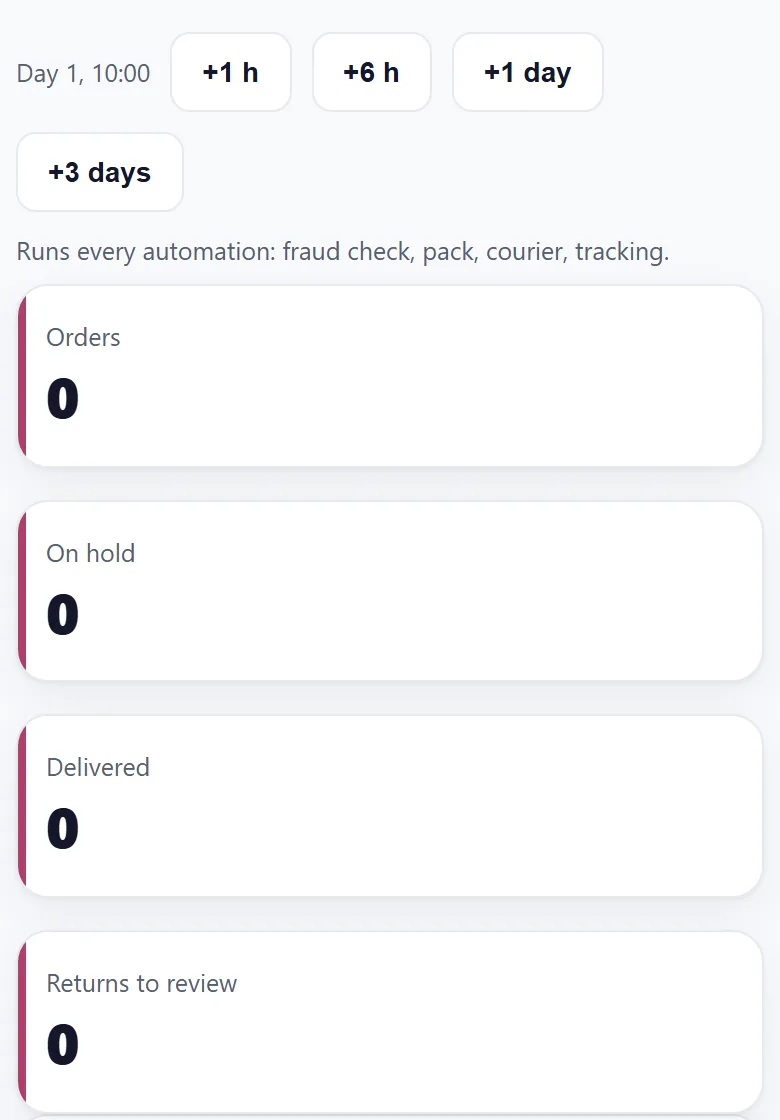
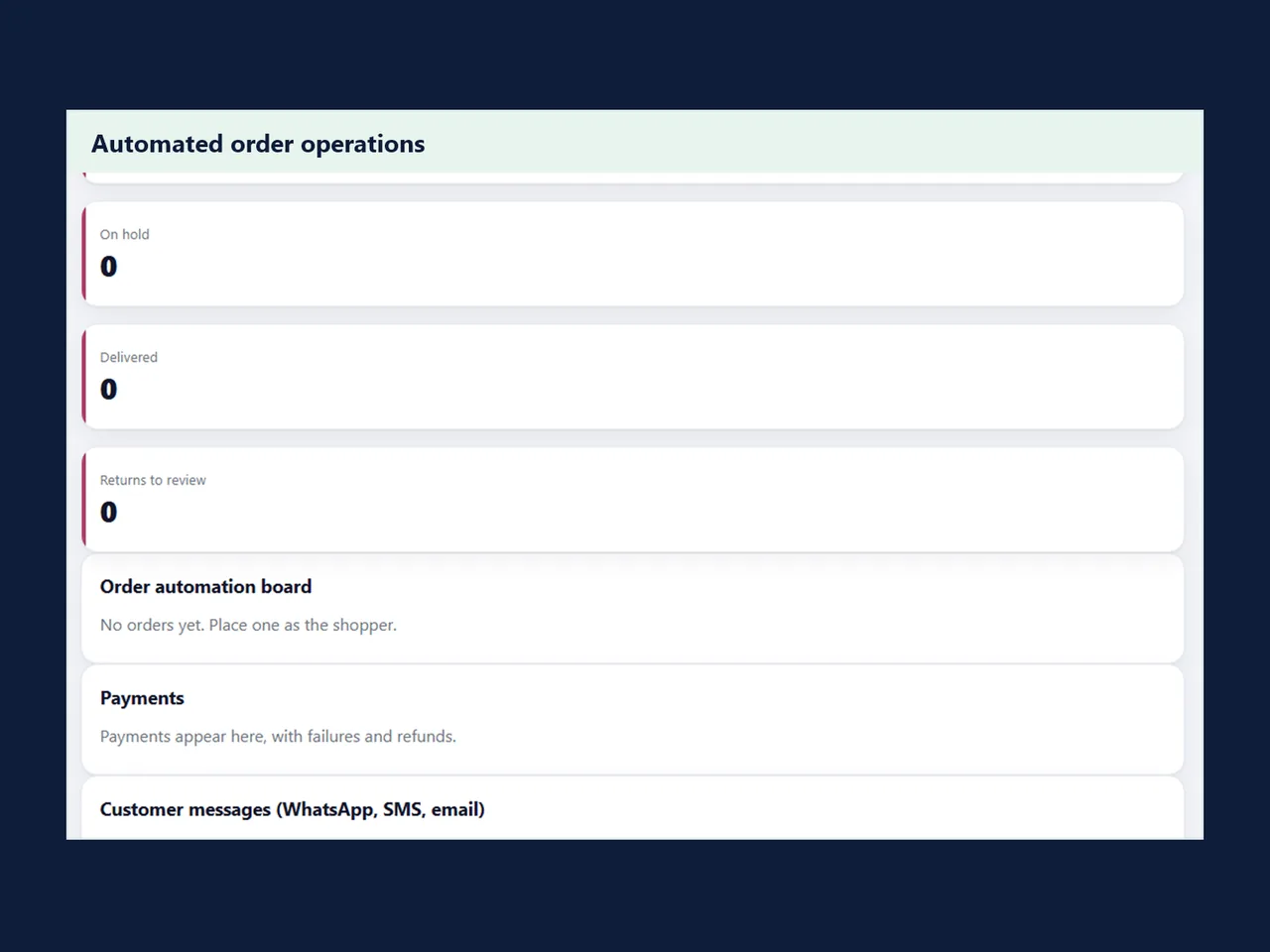
  • Order automation board with order, hold, delivered and return counts (custom e-commerce platform demo for Tehran, Iran)
    Order automation board · custom e-commerce platform for Tehran, Iran
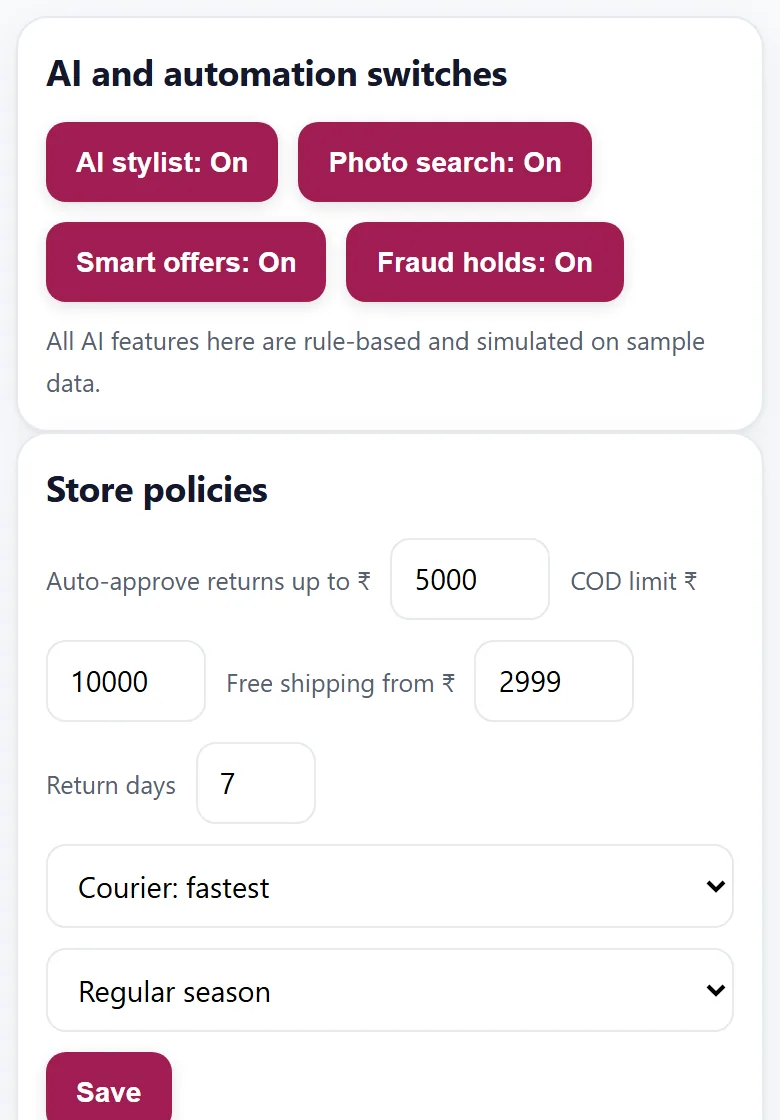
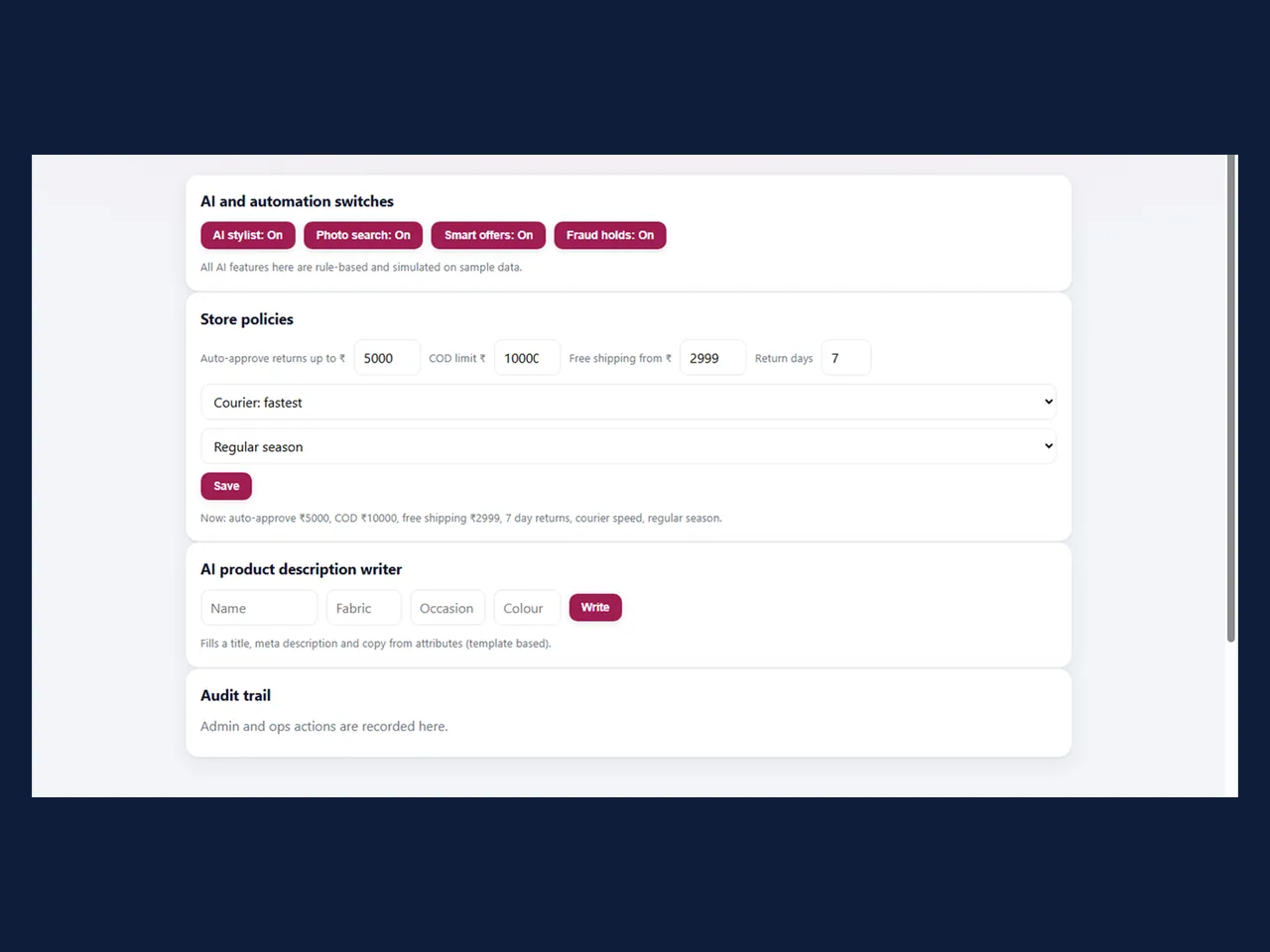
  • Store admin with AI switches and store policies, custom e-commerce platform built for Tehran, Iran
    Store admin · custom e-commerce platform for Tehran, Iran
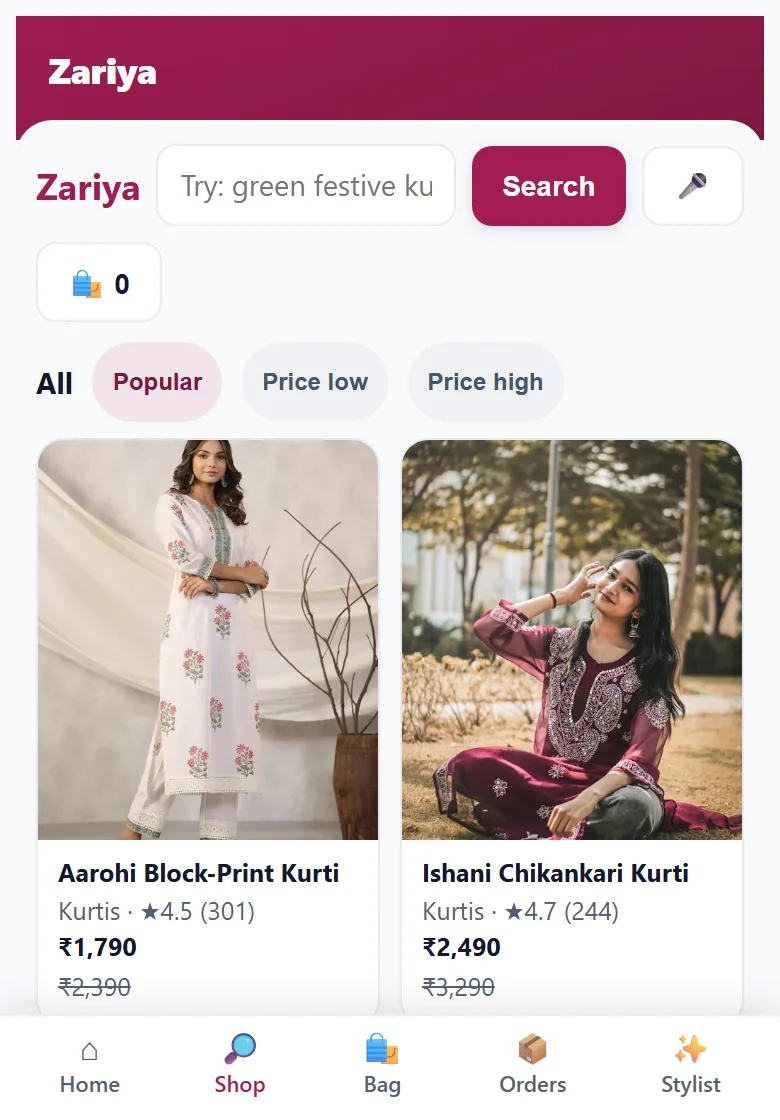
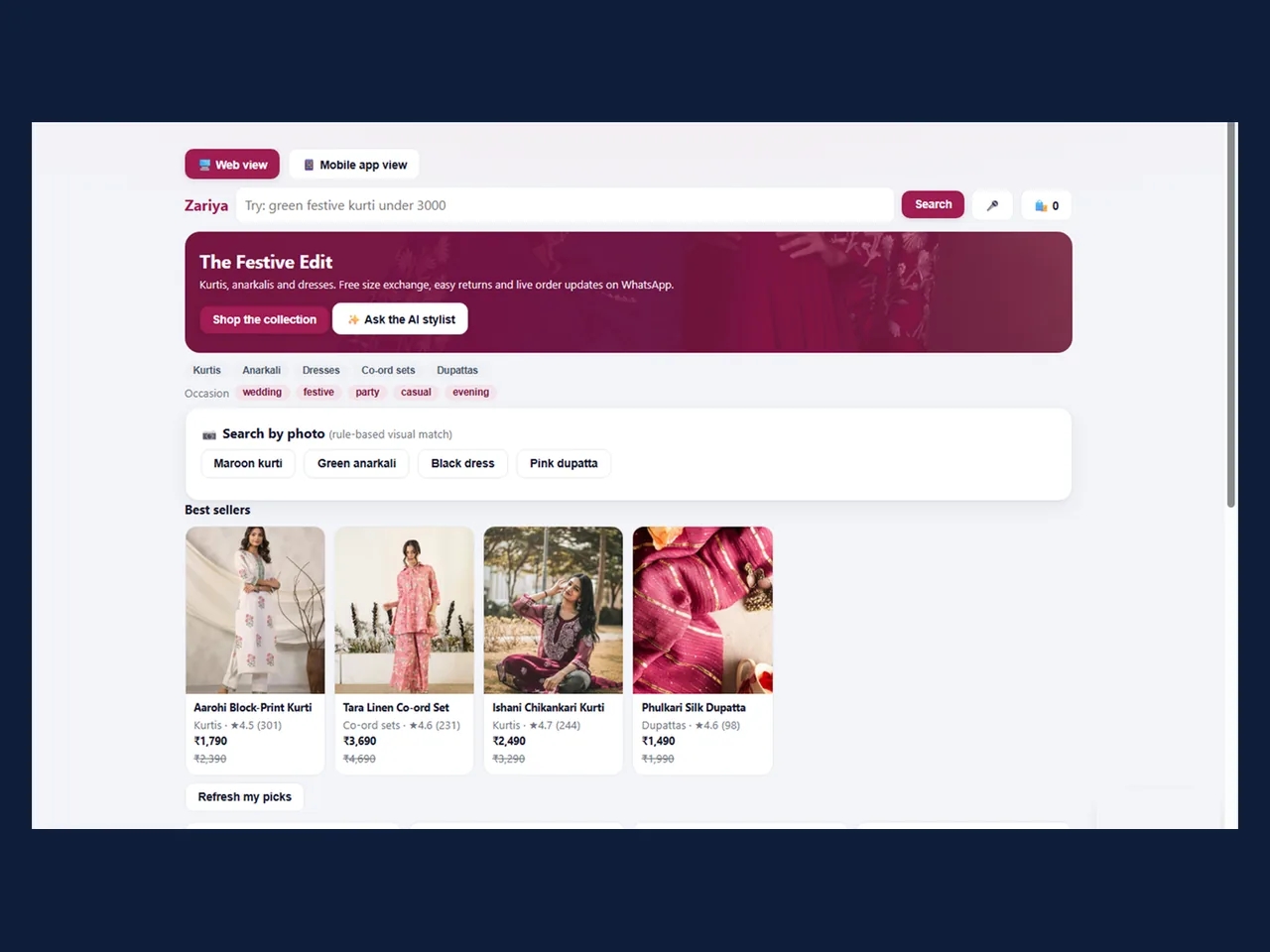
  • Fashion catalogue in the app with product photos, ratings and prices (custom e-commerce platform demo for Tehran, Iran)
    Fashion catalogue in the app · custom e-commerce platform for Tehran, Iran
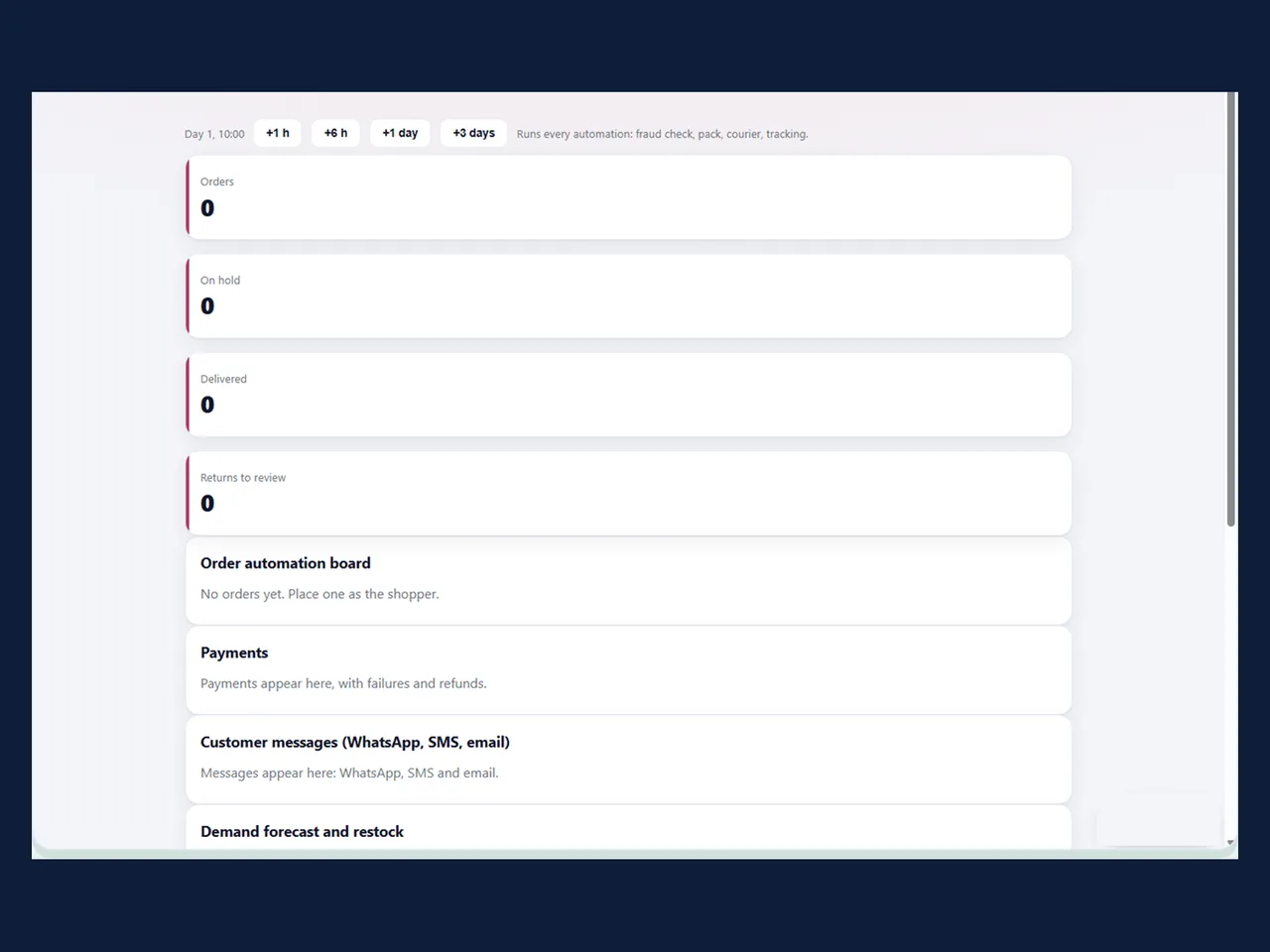
  • custom e-commerce platform for Tehran, Iran: order automation board with order, hold and return counts, payments, customer messages and a demand forecast
    Order automation · custom e-commerce platform for Tehran, Iran
  • Store admin with AI switches, store policies, a product description writer and an audit log, custom e-commerce platform built for Tehran, Iran
    Store admin · custom e-commerce platform for Tehran, Iran
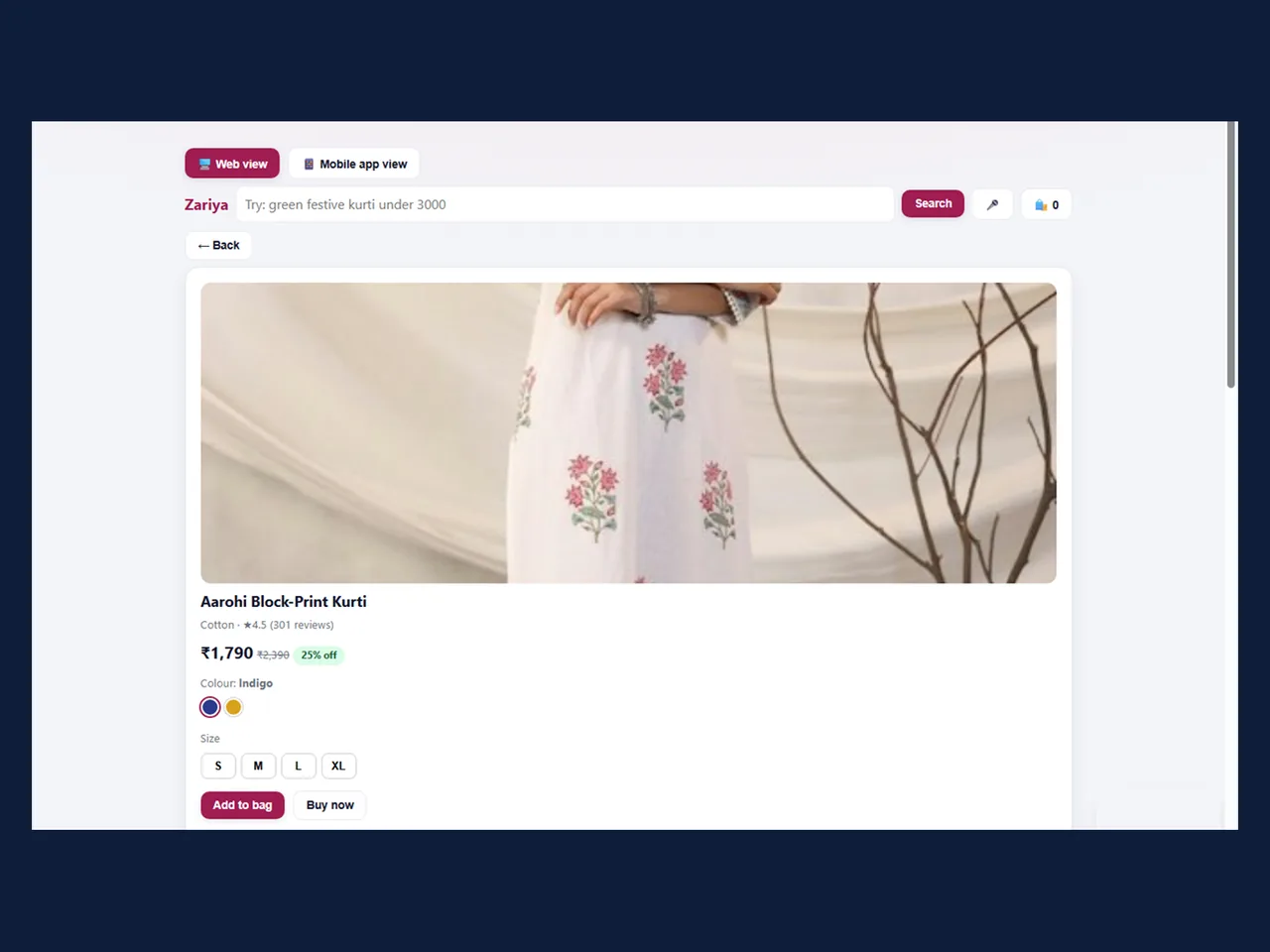
  • Fashion product page with a large photo, colour and size choices (custom e-commerce platform demo for Tehran, Iran)
    Product page · custom e-commerce platform for Tehran, Iran
  • Fashion storefront with a festive banner, categories and best sellers, NNT Mart custom e-commerce platform for Tehran, Iran
    Storefront · custom e-commerce platform for Tehran, Iran
  • Order operations moving each order from payment check to packing, courier and delivery, NNT Mart custom e-commerce platform for Tehran, Iran
    Automated order operations · custom e-commerce platform for Tehran, Iran
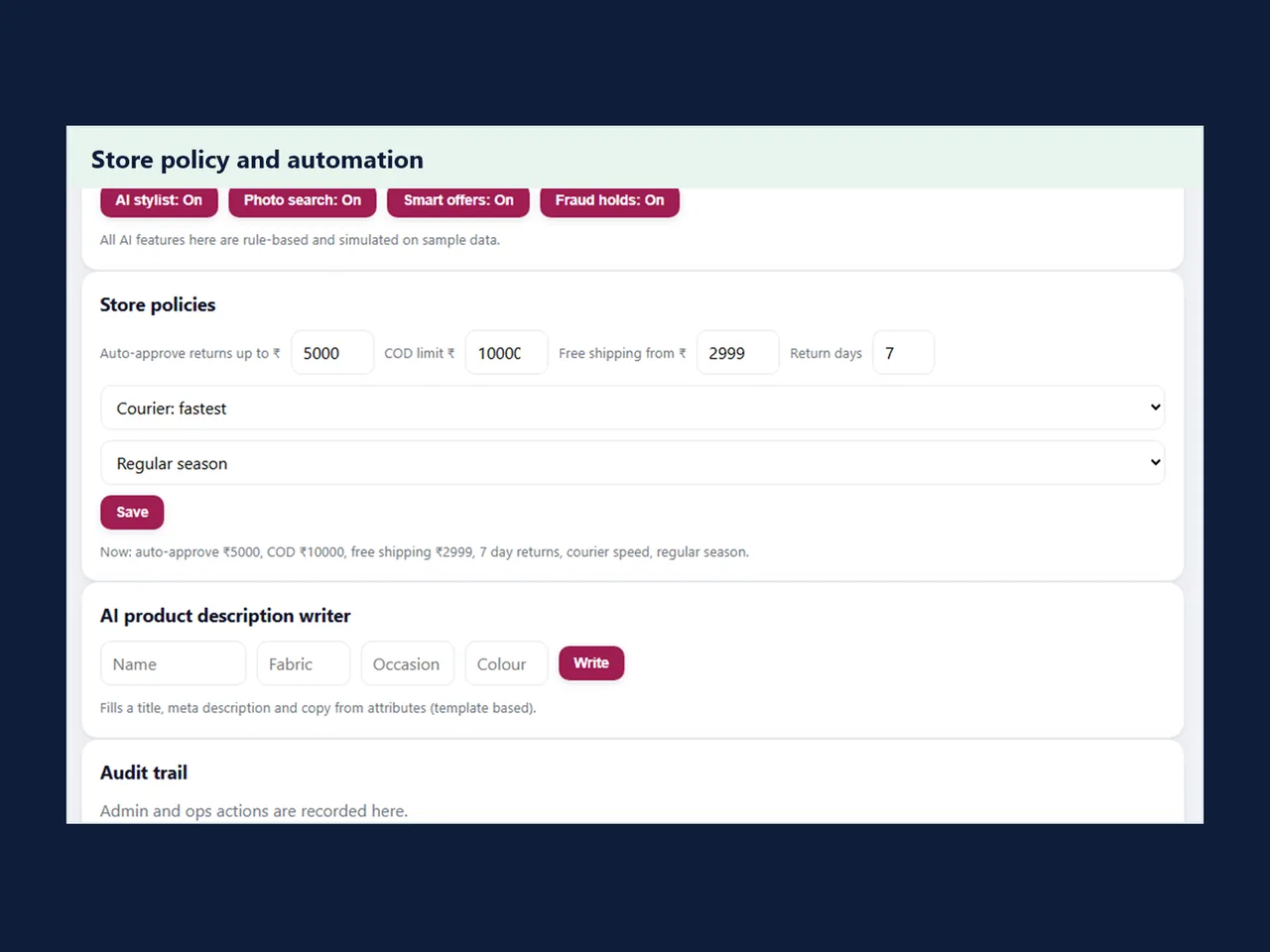
  • custom e-commerce platform for Tehran, Iran: store policy and automation settings for returns, free shipping, cash on delivery and AI
    Store policy and automation · custom e-commerce platform for Tehran, Iran
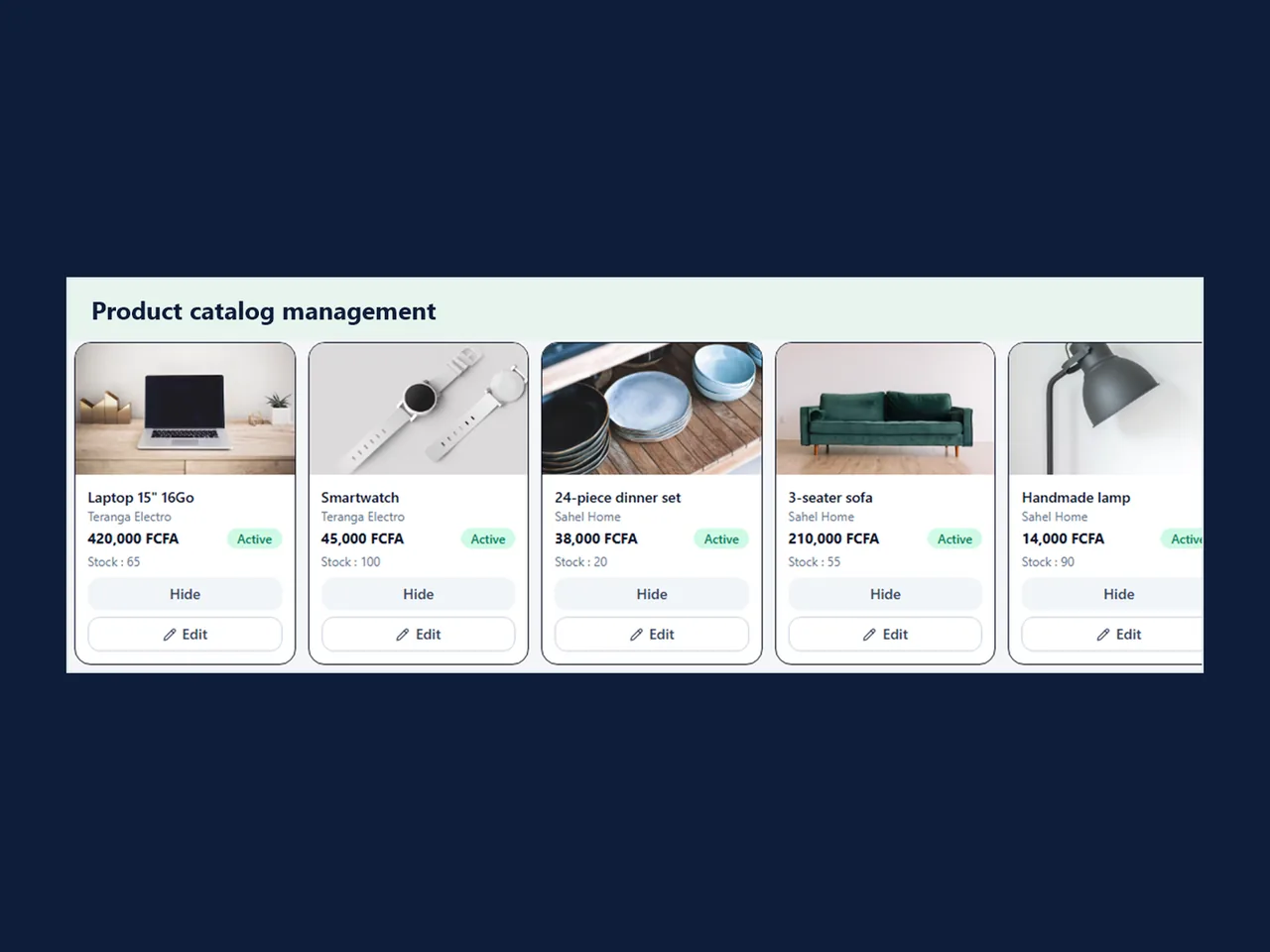
  • Product catalogue management with photos, stock and edit buttons, custom e-commerce platform built for Tehran, Iran
    Catalogue management · custom e-commerce platform for Tehran, Iran
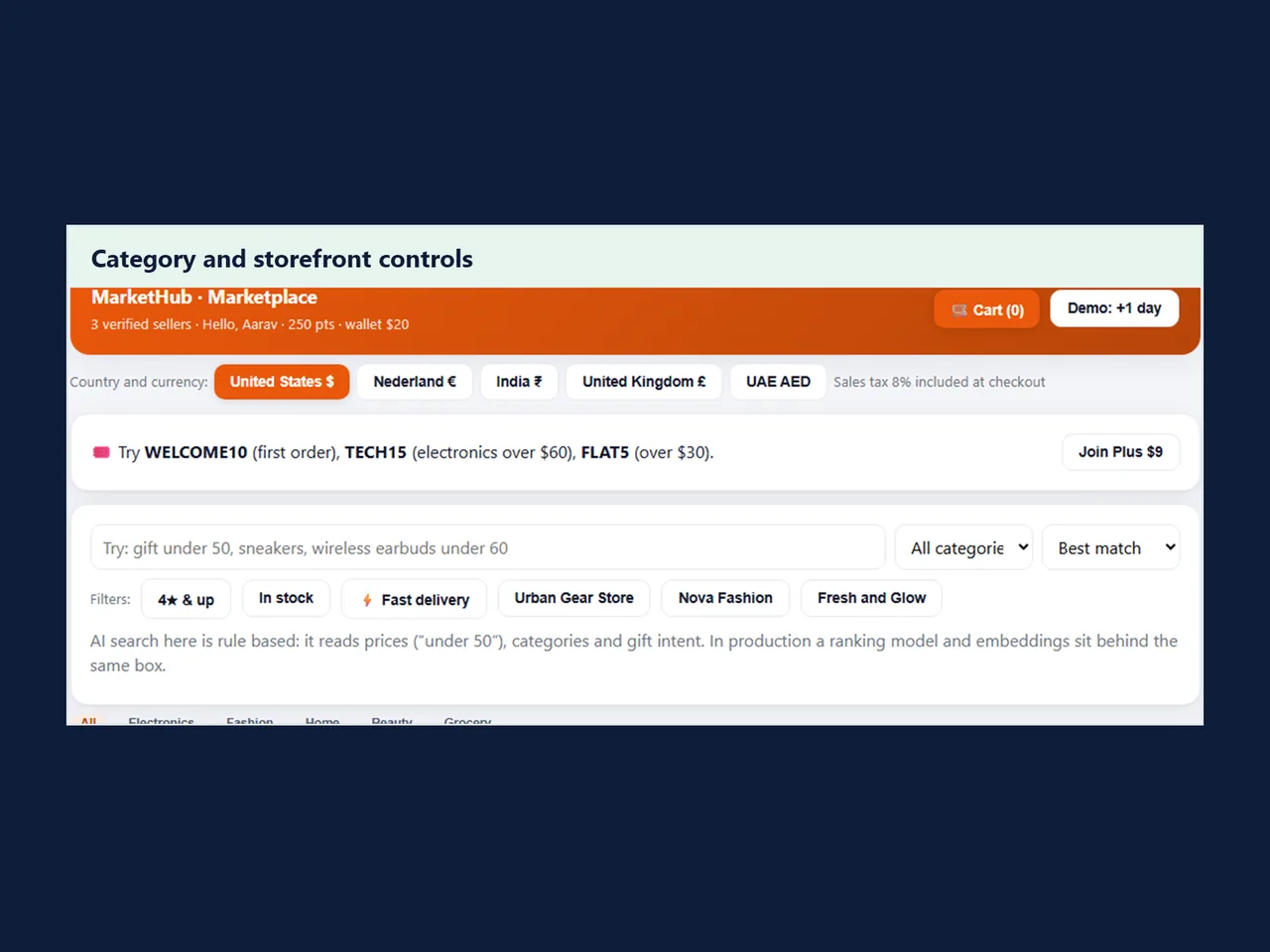
  • Category and storefront controls with product tiles and visibility settings, custom e-commerce platform built for Tehran, Iran
    Storefront controls · custom e-commerce platform for Tehran, Iran

Project blueprint

Example: how we would build a custom e-commerce platform for a business in Tehran

An illustrative example of how an engagement like this is scoped, from the first meeting to the first release. It is a worked example, not a client case study, and it carries no client names or results.

The market in Tehran

Tehran is shaped by retail, finance, services, manufacturing and IT. Electronics, fashion and home goods sell well online across Iran, shoppers already use Digikala and Divar, and they pay with Shetab domestic cards and Shaparak payment gateways. A custom e-commerce platform here has to fit those habits from the first release.

The situation

A growing company in Tehran has outgrown a template store: its pricing, bundles and fulfilment do not fit any plugin, and it needs ERP and warehouse links. The goal is a custom platform built to its process, with room to scale.

Key decisions we would make

Requirements before code

A short discovery turns your process into user stories and a demo, so scope and cost are agreed before the main build.

Headless where it helps

The storefront and the commerce engine are separate when speed or multiple front ends need it, and combined when simpler is better.

Integrations as first-class parts

ERP, warehouse, CRM and payment links are designed, tested and monitored like product features.

Performance and security budget

Page-speed targets, backups, access control and a security review are part of the plan, not an extra.

Checkout built around Shetab domestic cards and Shaparak payment gateways

Customers in Tehran pay with Shetab domestic cards and Shaparak payment gateways. The first release supports them through the gateway you choose, with every amount in Iranian rial (IRR) and refunds handled in the same admin.

Delivery, tax and data rules for Tehran

Orders ship through Iran Post and Tipax or your own team. Invoices are VAT-ready, customer data is handled under the Electronic Commerce Law and cybercrime rules, and returns follow the Electronic Commerce Law (2003) and the Consumer Rights Protection Law.

Working with your team in Tehran

Tehran runs on UTC+3:30, 2h behind India (IST). Meetings and demos are in your working hours, and content can run in Persian (Farsi) and Azerbaijani.

Delivery zones around Tehran

Zones and charges are set for Valiasr, Tajrish and the Tehran Grand Bazaar and the surrounding areas, with pickup points where customers prefer them. Logistics planning takes account of imam khomeini international airport, mehrabad airport and the tehran metro.

What the first release contains

  1. Discovery, demo and agreed backlog
  2. Core catalogue, pricing and checkout
  3. Checkout with Shetab domestic cards and IRR pricing
  4. ERP and warehouse integration
  5. Admin roles, reporting and audit log
  6. Load test, security review and go-live
  7. VAT-ready invoices and consent records for Tehran

Phased plan

PhaseWhat goes live
FoundationArchitecture, core commerce, priority integrations and migration.
DifferentiateCustom workflows, configurators and automation.
OptimisePerformance, new channels, apps and continuous enhancement.

Launch checklist for Tehran

The steps that differ by country and usually decide the go-live date. They run in parallel with the build.

  1. 1Open the merchant account for Shetab domestic cards and Shaparak payment gateways, with the documents your business category needs in Iran. This usually sets the go-live date, so it starts in week one.
  2. 2Set up VAT on products, shipping and invoices as the rules require: Iran charges 10% VAT (value-added tax) with e-commerce sellers registering through the Moodian tax system for….
  3. 3Publish a privacy notice and consent flow that follow the Electronic Commerce Law and cybercrime rules, and keep the records the law asks for.
  4. 4Write the returns, refund and delivery policy to meet the Electronic Commerce Law (2003) and the Consumer Rights Protection Law.
  5. 5Onboard Iran Post and Tipax for Tehran: rates, pickup, tracking links and failed-delivery rules.
  6. 6Prepare storefront and emails in Persian (Farsi) and Azerbaijani, with IRR formats, and review them with a native speaker.
  7. 7Agree support hours for Tehran (UTC+3:30) and the go-live window, then run a rehearsal order end to end.

Rules in Tehran and what we build for each

AreaWhat appliesWhat the build does
TaxIran charges 10% VAT (value-added tax) with e-commerce sellers registering through the Moodian tax system for electronic invoicesVAT-ready prices, invoices and tax reports.
Customer dataThe Electronic Commerce Law and cybercrime rules; data-protection rules are not consolidated in a single lawConsent capture, data export and deletion tools, retention rules.
Consumer rulesThe Electronic Commerce Law (2003) and the Consumer Rights Protection LawReturn window, refund flow and clear delivery and price terms.
PaymentsCustomers expect Shetab domestic cards and Shaparak payment gateways.Gateway adapters for Shetab domestic cards and Shaparak payment gateways, with IRR settlement.
DeliveryCommon carriers: Iran Post, Tipax and Mahex.Rate, label and tracking links, with zone and weight rules.

Rules are summarised for planning; your accountant and lawyer confirm what applies to your business.

Risks and how we handle them

RiskWhat we do about it
Scope creepA ranked backlog with milestones you approve; changes are priced before they are built.
Integration surprisesInterfaces are agreed and tested early with sample data.
Dependency on one developerDocumentation, source-code ownership and a second engineer on the project.
Payment-provider approval in IranThe merchant application for Shetab domestic cards and Shaparak payment gateways starts in week one, in parallel with the build, with the documents your business category needs.
Local rules changeTax, consent and policy texts are settings, so a change in the Electronic Commerce Law and cybercrime rules or VAT rules does not need a new build.
Demand concentrated in TehranA city of about 8.7 million people can fill a first release quickly, so stock, delivery slots and support are sized for the launch weeks and reviewed weekly.

How success is measured

A live dashboard tracks page load and API response times, uptime, order-sync accuracy, manual-work hours saved from launch day.

What is not included

Third-party licences, hosting fees and data clean-up inside your own systems stay with you.

Plan yours: free requirements meeting and demo in 24 hours

Key takeaways

  • Your custom e-commerce platform is planned, designed and coded for your business model — not adapted from someone else's — and it can ship with a customer or staff mobile app on day one.
  • Checkout ready for Shetab domestic cards, Shaparak payment gateways (Zarinpal, IDPay) and Shatel and mobile wallets, with delivery through Iran Post and Tipax or your own team.
  • VAT-ready invoicing and controls designed around the Electronic Commerce Law and cybercrime rules; data-protection rules are not consolidated in a single law.
  • Free demo within 24 hours of the requirements meeting; you own 100% of the source code after final payment.

The case for a custom e-commerce platform in Tehran

Tehran is a capital and largest city of iran, where around 8.7 million people live and shop, and one of the markets in Iran where we build custom e-commerce platforms.

Key sectors include retail, finance, services, manufacturing and IT, with business districts such as Valiasr, Tajrish and the Tehran Grand Bazaar.

Logistics are supported by Imam Khomeini International Airport, Mehrabad Airport and the Tehran Metro, which matters when you promise customers fast delivery.

Iran’s online shopping is large and domestic: Digikala, Divar and Instagram dominate and Shetab cards process payments. International cards and many global cloud tools are unavailable, so stores here need local gateways and in-country hosting.

For a business in Tehran, the opportunity is to own the customer relationship: your own custom e-commerce platform keeps your margin, your data and your brand, while marketplaces and social channels become additional sales routes instead of the only one.

Why Tehran businesses need their own online channel today

Customers in Iran already pay with Shetab domestic cards and Shaparak payment gateways (Zarinpal, IDPay) and compare prices on Digikala and Divar before they decide. Tehran alone has about 8.7 million people, and a business that cannot be found, ordered from and paid online loses that buyer at the moment of choice.

Orders taken by phone, WhatsApp or spreadsheet cost real money: stock goes wrong, payments are chased by hand and sales stop when the shop closes. Electronics, fashion and home goods are among the strongest online categories in Iran, so the demand is already there to capture.

It is also a compliance move. VAT-ready invoices and records, and customer data handled under the Electronic Commerce Law and cybercrime rules, are far easier to keep right in one system than across notebooks and chat threads.

AreaOffline and chat ordersWith your own custom e-commerce platform in Tehran
OrdersPhone, WhatsApp, spreadsheets; open only in shop hoursTaken 24 hours a day, tracked end to end
PaymentsCash and manual follow-upShetab domestic cards and Shaparak payment gateways (Zarinpal, IDPay) and other local methods at checkout
ReachWalk-ins and word of mouthSearch, social, Digikala and Divar and a link anyone can share
RecordsPaper and chat historyVAT invoices, customer and stock data in one place

Localised for Tehran, not translated into it

A store that works in Tehran respects local habits as well as local law. These are the details we configure first.

Currency and pricing

Prices, taxes, shipping and refunds are shown in Iranian rial (IRR), formatted the way Tehran customers read them.

Language and content

Storefront copy, product pages and emails can run in Persian (Farsi), Azerbaijani and Kurdish, with local date and number formats.

Local trust signals

We add the payment logos, courier names and policy pages shoppers in Tehran recognise: Shetab domestic cards and Shaparak payment gateways (Zarinpal, IDPay) and delivery through Iran Post.

Domain, phone and contact

Using .ir where it suits you signals a local business to shoppers and search engines. Contact buttons are pre-set with +98, so a customer in Tehran taps once to call or message.

Talent and partners nearby

With University of Tehran, Sharif University of Technology and Amirkabir University close by, finding people to manage catalogues, content and support after launch is realistic in Tehran.

Custom-built for how you sell in Tehran

We do not hand Tehran businesses a ready-made theme: we study how you sell, then build the online platform and Android/iOS app your customers and staff actually need.

Typical clients include multi-brand groups, businesses outgrowing SaaS platforms, companies migrating legacy stores and regulated sectors. Categories that sell especially well online in Iran — electronics, fashion, home goods and food and saffron — get catalogue structures and filters designed for them.

We start with a requirements meeting, show you a working demo within 24 hours, and only then propose scope, milestones and budget.

What a custom e-commerce platform in Tehran should include first

Enterprises with complex catalogues, multi-brand groups and businesses outgrowing SaaS platforms in Tehran usually get the fastest return by launching the journeys that bring in orders first, then adding depth. The order we recommend:

  1. Foundation: Architecture, core commerce, priority integrations and migration. Set up for IRR, Shetab domestic cards and Iran Post.
  2. Differentiate: Custom workflows, configurators and automation.
  3. Optimise: Performance, new channels, apps and continuous enhancement.

What your custom e-commerce platform includes

Each module below is configured — or custom-developed — to your requirements. You choose what launches first and what follows in later phases.

Custom workflows

Product configurators, made-to-order flows, approvals, contracts and industry-specific rules. Payment steps are built around Shetab domestic cards, Shaparak payment gateways (Zarinpal, IDPay) and Shatel and mobile wallets, the options shoppers here already trust.

Headless architecture

API-first commerce with a fast front end, so web, app, kiosk and marketplace channels share one backend. Delivery can be booked through Iran Post, Tipax and Mahex or dispatched by your own riders around Tehran.

Multi-entity operations

Multiple brands, companies, warehouses, currencies and tax registrations on one platform. Inventory can sit in Tehran, in a partner warehouse or across Iran, with click-and-collect where customers want it.

Deep integrations

ERP, PIM, WMS, CRM, POS, accounting and legacy systems with reliable, monitored data sync. Reports show which products, customers and areas of Tehran drive revenue.

Migration

Move from older platforms with product, customer and order history, SEO-safe redirects and parallel runs. Content and design can follow how customers in Tehran search and buy, including Persian (Farsi) and Azerbaijani where you need it.

Performance and security

Caching, CDN, load testing, security hardening, audit logs and cloud infrastructure as code. Product data imports from your existing sheets or ERP, so Tehran teams do not re-type thousands of items.

What businesses in Tehran ask us for

Businesses in Tehran search for these in different words. Each one is something NNT Mart designs, builds and supports:

Custom ecommerce development in Tehran

Product configurators, made-to-order flows, approvals, contracts and industry-specific rules. In Tehran it takes Shetab domestic cards at checkout and ships through Iran Post.

Headless ecommerce development in Tehran

API-first commerce with a fast front end, so web, app, kiosk and marketplace channels share one backend. For Tehran, prices, tax and invoices are in IRR and VAT-ready.

Enterprise ecommerce solution in Tehran

Multiple brands, companies, warehouses, currencies and tax registrations on one platform. Built for Tehran: Shetab domestic cards and Shaparak payment gateways payments and Iran Post delivery.

Ecommerce development company in Tehran

ERP, PIM, WMS, CRM, POS, accounting and legacy systems with reliable, monitored data sync. In Tehran it takes Shetab domestic cards at checkout and ships through Iran Post.

Ecommerce ERP integration in Tehran

Move from older platforms with product, customer and order history, SEO-safe redirects and parallel runs. For Tehran, prices, tax and invoices are in IRR and VAT-ready.

Ecommerce platform migration in Tehran

Caching, CDN, load testing, security hardening, audit logs and cloud infrastructure as code. Built for Tehran: Shetab domestic cards and Shaparak payment gateways payments and Iran Post delivery.

Bespoke ecommerce software in Tehran

Product configurators, made-to-order flows, approvals, contracts and industry-specific rules. In Tehran it takes Shetab domestic cards at checkout and ships through Iran Post.

Scalable ecommerce architecture in Tehran

API-first commerce with a fast front end, so web, app, kiosk and marketplace channels share one backend. For Tehran, prices, tax and invoices are in IRR and VAT-ready.

What a custom e-commerce platform gives your Tehran business

The gain is practical and measurable:

Keep the customer and the margin

Orders that come through your own custom e-commerce platform keep your pricing, brand and customer list, instead of paying commission on Digikala and Divar for every sale.

Sell round the clock to Tehran

Customers order and pay at any hour, including evenings and weekends, with Shetab domestic cards and Shaparak payment gateways (Zarinpal, IDPay) at checkout, so sales no longer depend on shop hours.

Run the business from one place

Custom workflows and headless architecture sit in one admin, connected to SAP, Oracle, Microsoft Dynamics and Odoo ERPs, so the team stops re-typing orders and stock.

See what works

A live dashboard tracks page load and API response times, uptime and order-sync accuracy, so Tehran decisions on stock, offers and spend come from numbers, not guesses.

Reach customers on their phones

An Android and iOS app on the same backend adds push alerts, saved details and one-tap reorder for repeat buyers in Tehran.

Be found by search and AI assistants

Fast pages, product and FAQ schema, a sitemap and direct-answer content let Google and AI assistants read, quote and recommend your custom e-commerce platform when Tehran customers ask.

Take orders on WhatsApp and the app

Customers in Tehran can start an order from a link, WhatsApp or the mobile app and finish it in one checkout, so no enquiry is lost in a chat thread.

Own the technology

After final payment you receive 100% of the source code, design files and documentation, with a 90-day warranty, so growth never depends on a licence you cannot move.

How Tehran customers pay online

Checkout is where most online sales are won or lost. In Iran, customers expect to pay with Shetab domestic cards, Shaparak payment gateways (Zarinpal, IDPay) and Shatel and mobile wallets, and many also look for cash on delivery and bank transfer.

We integrate suitable gateways and providers for your business category and merchant eligibility, handle payment status, failed-payment retries and refunds, and keep sensitive card data with the provider rather than on your servers. All amounts are shown in Iranian rial (IRR).

Business buyers around Valiasr often want invoices or bank transfer, while consumers lean on Shetab domestic cards. We support both flows.

  • Shaparak payment gateways (Zarinpal, IDPay)
  • Shetab domestic cards
  • Bank transfer
  • Cash on delivery
  • Shatel and mobile wallets

Fulfilment options for Tehran orders

Your custom e-commerce platform can book shipments and share tracking with Iran Post, Tipax, Mahex, Snapp! Express, Alopeyk and Chapar, or route orders to your own riders and stores across Tehran.

We set up shipping zones, cut-off times, free-shipping thresholds, cash-collection rules and returns so the promise on the product page matches what your team can deliver.

Connectivity in the area — Imam Khomeini International Airport, Mehrabad Airport and the Tehran Metro — makes regional and national dispatch from Tehran practical.

Tax, invoicing and compliance in Iran

For Tehran sellers, tax first: Iran charges 10% VAT (value-added tax) with e-commerce sellers registering through the Moodian tax system for electronic invoices.

Two frameworks shape the build: the Electronic Commerce Law and cybercrime rules; data-protection rules are not consolidated in a single law, and the Electronic Commerce Law (2003) and the Consumer Rights Protection Law.

We build the technical controls — tax-inclusive pricing, compliant invoices, consent banners, terms and return pages, data-access roles and audit logs. We are not a law firm, so final legal and tax positions should be confirmed with your own adviser in Iran.

Tehran sellers: marketplace plus your own store

Many Tehran sellers already list on Digikala, Divar, Basalam, Snapp! Market, Torob and Instagram shops. Those channels bring traffic, but they also take commission, control the customer relationship and change rules without notice.

NNT Mart gives you a channel you own: your domain, your customer list, your pricing and your brand. Where it helps, we connect product feeds and orders from marketplaces so stock stays in sync and your team works from one dashboard.

Who we build for in Tehran

Popular online categories in Iran include electronics, fashion, home goods, food and saffron, carpets and crafts and cosmetics. Local demand in Tehran is shaped by retail, finance, services, manufacturing and IT, so we often design catalogues and B2B ordering around those sectors. In Tehran, we most often build custom e-commerce platforms for:

Enterprises with complex catalogues

Enterprises with complex catalogues get custom workflows plus multi-entity operations workflows tailored to their operations.

Multi-brand groups

We map how multi-brand groups sell today and digitise it end to end — from enquiry and order to payment, dispatch and repeat purchase.

Businesses outgrowing SaaS platforms

For businesses outgrowing SaaS platforms, we usually start with deep integrations, then add WMS and 3PL systems once orders are flowing.

Companies migrating legacy stores

Catalogue, pricing and fulfilment rules designed for companies migrating legacy stores in Tehran, connected to the systems you already use.

Regulated sectors

Regulated sectors get migration plus custom workflows workflows tailored to their operations.

High-traffic retailers

We map how high-traffic retailers sell today and digitise it end to end — from enquiry and order to payment, dispatch and repeat purchase.

Add a mobile app for Tehran customers

Because the platform is API-first, customer, staff and partner mobile apps can be added at any point without rebuilding the backend.

For shopping app development company in Tehran: one team builds the Android and iOS shopping app and the store behind it, and the ecommerce mobile app cost depends on your screens, integrations and team size.

One backend serves the website and the apps, and the apps ship under your own Google Play and App Store accounts — so what you change once appears everywhere.

Push notifications can be timed to UTC+3:30 so offers reach Tehran customers when they are awake, and the interface can run in Persian (Farsi) and Azerbaijani.

  • WMS and 3PL systems
  • POS and store systems
  • Search engines (Elasticsearch, Algolia)
  • Identity and SSO
  • Cloud platforms (AWS, Azure, GCP)
  • SAP, Oracle, Microsoft Dynamics and Odoo ERPs
  • BI and data warehouses
  • PIM and DAM

Integrations above are examples; we connect any system that offers a suitable API, database access or approved import and export process.

Launch roadmap and success metrics

We launch the journeys that create value first, then add depth. A typical roadmap for a custom e-commerce platform in Tehran:

PhaseWhat goes live
FoundationArchitecture, core commerce, priority integrations and migration. Configured for IRR, Shetab domestic cards and Iran Post from the start.
DifferentiateCustom workflows, configurators and automation.
OptimisePerformance, new channels, apps and continuous enhancement. Reviewed against how Tehran customers actually buy.

Success is measured on page load and API response times, uptime, order-sync accuracy, manual-work hours saved, release frequency and total cost of ownership — tracked on a dashboard you can see from launch day.

Working with our team from Tehran

Our team covers UTC+3:30 — 2h behind India (IST) — through three 8-hour shifts, so a Tehran client always reaches someone during the local working day.

Project communication is in English; storefront content can be produced in Persian. You get a named lead, direct engineer access and an NDA if you ask.

Our head office is in Chhapi, Gujarat, with an office in Hyderabad and representation in Nigeria, South Africa, Ethiopia and Zambia; Tehran clients are served remotely with on-site workshops when the project needs them.
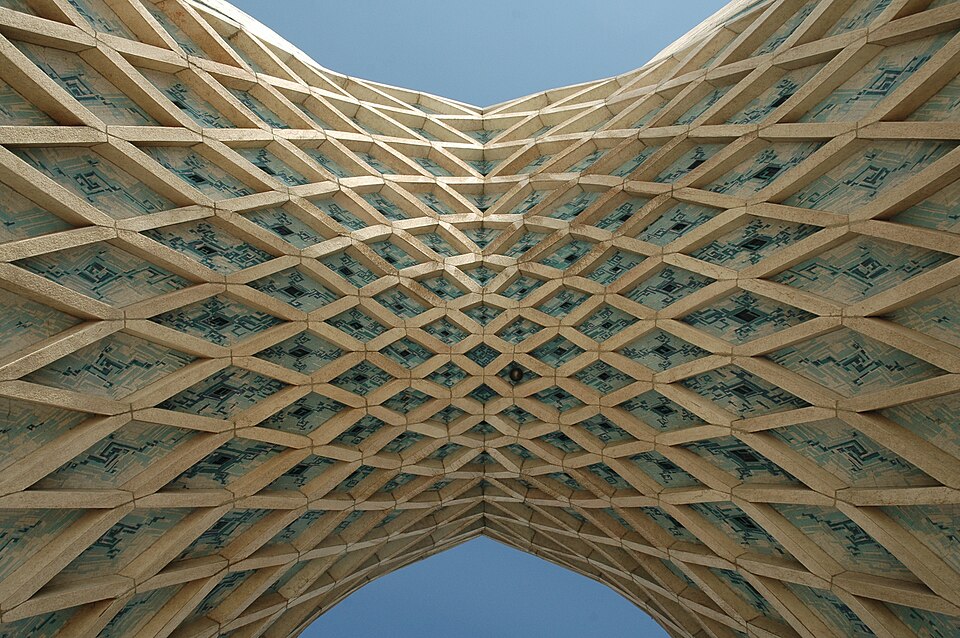
Tehran — local market for custom e-commerce platforms
Tehran · Photo: Wikimedia Commons
Analytics dashboard monitoring a custom commerce platform — Tehran

Tehran — the market we build for

Engineer writing code for a custom e-commerce platform — Tehran
Custom E-Commerce Development

Custom E-Commerce Development in Tehran: cost, timeline and local setup

There is no fixed package. Your budget and launch date are set from your requirements in a free meeting, and a working demo follows within 24 hours. The quote is given in Iranian rial (IRR) or US dollars, split into milestones you approve one by one.

What decides the cost in Tehran

Catalogue and rules
Number of products, variants and price lists your Tehran customers see.
Payments
How many of Shetab domestic cards, Shaparak payment gateways (Zarinpal, IDPay) and Shatel and mobile wallets you need at checkout, with amounts in Iranian rial (IRR).
Delivery
Courier links such as Iran Post and Tipax, own riders, pickup points or zone-based rates.
Tax and law
Iran charges 10% VAT (value-added tax) with e-commerce sellers registering through the Moodian tax system for electronic invoices; consent and policies under the Electronic Commerce Law and cybercrime rules; data-protection rules are not consolidated in a single law.
Languages
Storefront, emails and invoices in Persian (Farsi), Azerbaijani and Kurdish and English.
Integrations
ERP, accounting, CRM and marketplaces like Digikala and Divar.
Mobile apps
Android and iOS apps for customers, staff or dealers on the same backend.

How the timeline is set

  1. Requirements meeting — online, in your time zone (UTC+3:30).
  2. Demo within 24 hours — so you see the custom e-commerce platform before you commit.
  3. Written scope, budget and dates — agreed to your deadline, with priority journeys first.
  4. Two-week sprints — a demo every sprint and a daily written update.
  5. Launch and 90-day warranty — then optional fixed-fee support.

Rules we build for in Iran

  • Tax: Iran charges 10% VAT (value-added tax) with e-commerce sellers registering through the Moodian tax system for electronic invoices.
  • Privacy: the Electronic Commerce Law and cybercrime rules; data-protection rules are not consolidated in a single law
  • Consumer: the Electronic Commerce Law (2003) and the Consumer Rights Protection Law

Local payment rails in Iran

  • Shetab domestic cards
  • Shaparak payment gateways (Zarinpal, IDPay)
  • Shatel and mobile wallets
  • cash on delivery
  • bank transfer

How we work

How a custom e-commerce platform project runs with N&T Software for Tehran

Your custom e-commerce platform is designed and built to your specification through seven clear stages. Daily updates, weekly reviews and a signed acceptance at each milestone keep the project transparent from the first workshop to the support desk.

  1. 01

    Discover

    ✓ Scope signed off

  2. 02

    Design

    ✓ Architecture OK

  3. 03

    Build

    ✓ Sprint accepted

  4. 04

    Secure & Test

    ✓ UAT signed off

  5. 05

    Deploy

    ✓ Cutover done

  6. 06

    Handover

    ✓ Code handed over

  7. 07

    Support

    ✓ SLA active

A milestone payment plan built around acceptance

Milestones are customised to your requirements — six or more is typical, and delivery time is agreed around your scope. Every payment after the advance is released only after you have seen the working result and given written sign-off. Here is an example plan for a custom e-commerce platform:

Protected after launch — warranty and annual support for your custom e-commerce platform

Every project includes a free 90-day defect warranty. After that, the same team that built your custom e-commerce platform keeps it secure, updated and running on a fixed annual fee agreed up front — no open-ended hourly billing and no surprise invoices.

No lock-in: the platform is yours

For every custom e-commerce platform, upon full and final payment the complete source code and intellectual property are transferred to you — so you can host, maintain and enhance the system with any developer.

Read the full Custom E-Commerce Development delivery process — reporting, payment milestones, warranty, team and engagement models →

Custom E-Commerce Development in Tehran — FAQs

Do you provide support after launch for clients in Tehran?

Every project includes a free 90-day defect warranty, followed by an optional fixed-fee annual support package with a dedicated developer, SLA-based fixes and a 24×7 helpdesk across three shifts.

How long does it take to launch a custom e-commerce platform in Tehran?

Timelines are agreed around your scope. You see a demo within 24 hours of our requirements meeting, and a phased plan lets priority journeys go live first while further modules follow.

Which payment methods can my custom e-commerce platform accept in Tehran?

We can integrate Shetab domestic cards, Shaparak payment gateways (Zarinpal, IDPay), Shatel and mobile wallets, cash on delivery and bank transfer, subject to provider approval for your business category. Amounts are handled in Iranian rial.

Which parts of Tehran do you build for?

Clients usually trade around Valiasr, Tajrish and the Tehran Grand Bazaar, but the platform is not tied to one neighbourhood: delivery zones, pickup points and prices can be set for any part of Tehran.

Do I own the source code of my custom e-commerce platform?

Yes. After full and final payment, 100% of the source code, design files, database schemas, deployment scripts and documentation are transferred to you, with no lock-in or forced subscription.

Can you migrate my existing website or store in Tehran?

Yes. We review your current platform, products, customers, orders and URLs, then migrate with redirects so you keep search rankings and order history.

How much does a custom e-commerce platform cost in Tehran?

There is no fixed package price: every NNT Mart custom e-commerce platform is quoted to your requirements and budget after a free requirements meeting and demo. Cost depends on catalogue size, integrations, payment and delivery rules, mobile apps and support. Payments are split into milestones, and 90% is released only after you accept working modules.

What time zone and language will we work in for a Tehran project?

Tehran runs on UTC+3:30 (2h behind India (IST)). We reply within 10 minutes around the clock, meet in your working hours and write storefront content in Persian (Farsi), Azerbaijani and Kurdish as well as English.

Is there a custom e-commerce platform development company near me in Tehran?

Yes, you can work with NNT Mart from Tehran without a local presence. The team meets you online in your time zone (2h behind India (IST)), answers within 10 minutes and shares a working demo within 24 hours of the requirements meeting.

How do I choose the best custom e-commerce platform development company for Tehran?

Compare partners on four things: custom work to your requirements, local payment and delivery support, full source-code ownership and post-launch support. NNT Mart covers all four, with Shetab domestic cards, Shaparak payment gateways (Zarinpal, IDPay) and Shatel and mobile wallets checkout, Iran Post delivery, 100% source code after final payment and a free 90-day defect warranty.

Shopify or a custom custom e-commerce platform — which is better for a Tehran business?

Shopify suits a small catalogue that fits its templates and apps, with monthly fees and app costs that grow with you. A custom custom e-commerce platform from NNT Mart fits your own pricing, payment (Shetab domestic cards and Shaparak payment gateways (Zarinpal, IDPay)), delivery and approval rules, has no per-sale platform fee, and you own the full source code.

What do I need to start selling online in Tehran?

A registered business, a bank account for settlements, a payment gateway account (Shetab domestic cards and Shaparak payment gateways (Zarinpal, IDPay) are common in Iran), a delivery partner such as Iran Post, your product list with photos and prices, and your VAT and return policies. NNT Mart helps set up the gateway, courier and store itself.

Can I manage products, prices and orders myself without coding?

Yes. Every NNT Mart custom e-commerce platform has an admin panel where your team adds products, changes prices and stock, runs offers and handles orders, refunds and invoices without a developer. Staff roles control who can see and change what, and training is part of the handover.

Is NNT Mart an ecommerce agency or an ecommerce platform for Tehran businesses?

NNT Mart is the e-commerce platform and development team of N&T Group, run by N & T Software Private Limited. Think of it as your ecommerce agency in India for Tehran: we design, build and support stores, B2B ecommerce portals, marketplaces and apps to your requirements.

Can the store and this website be used in my language in Tehran?

Yes. This website can be read in 130+ languages through the language switcher in the header, and your store is built multilingual: storefront, checkout and emails in Persian (Farsi), Azerbaijani and Kurdish, right-to-left layouts where needed, and prices in Iranian rial.

Will my store rank on Google and appear in AI answers in Tehran?

We build it search-ready: fast pages, clean URLs, product and FAQ schema, XML sitemaps and mobile-first design, so Google and AI assistants can read and quote your pages. Rankings depend on competition and content, so we do not promise a position.

Free demo in 24 hours

Plan your custom e-commerce platform in Tehran

Tell us what you sell and how you take orders today. We reply within 10 minutes, meet you to understand your requirements, and share a working demo within 24 hours.

We reply within 10 minutes, 24×7. Your details are used only to respond to your enquiry — see our privacy policy.

Tell us what you sell. We will show you a working demo in 24 hours.

Free requirements meeting, a demo built on your use case and a proposal priced to your budget — with no obligation.

Our prototypes

Try a live demo, then get yours built

All live demos →

Tagged with