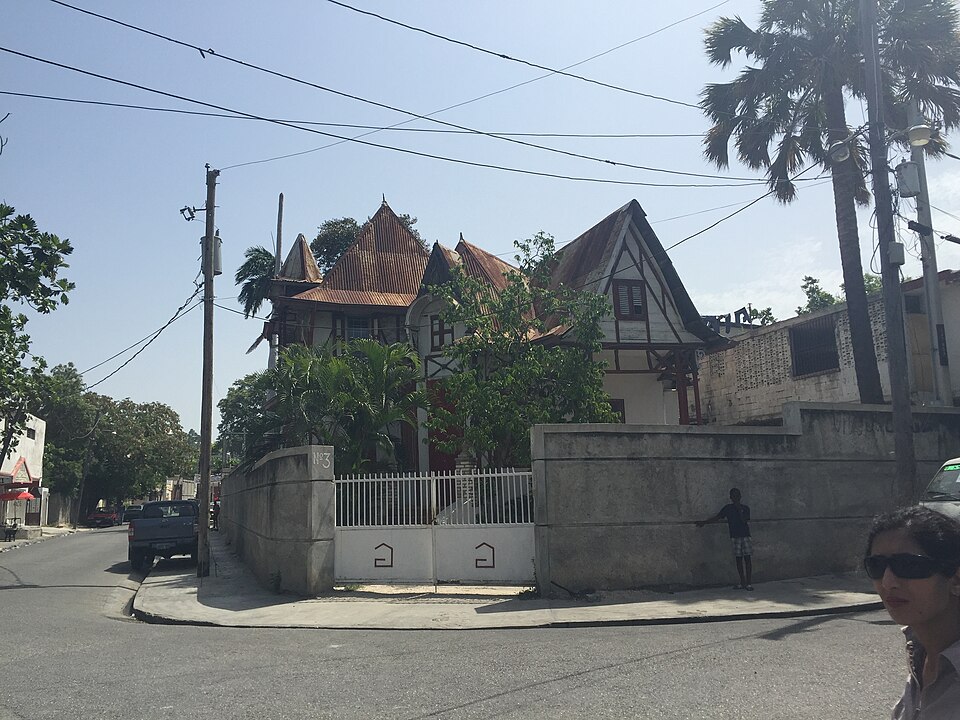
Why a shopping app makes sense for Port-au-Prince
Port-au-Prince is a capital of haiti, home to about 987,000 people, and one of the markets in Haiti where we build mobile commerce apps.
Key sectors include trade, services, textiles, banking and telecoms, with business districts such as the Pétion-Ville road, Delmas and the Port-au-Prince harbour.
Logistics are supported by Toussaint Louverture International Airport and the Port of Port-au-Prince, which matters when you promise customers fast delivery.
Haiti’s digital payments are led by mobile wallets such as MonCash, and a large diaspora sends remittances and buys goods for relatives. Stores need reliable local delivery partners and clear payment instructions.
For a business in Port-au-Prince, the opportunity is to own the customer relationship: your own shopping app keeps your margin, your data and your brand, while marketplaces and social channels become additional sales routes instead of the only one.
What makes a Port-au-Prince store feel local
A store that works in Port-au-Prince respects local habits as well as local law. These are the details we configure first.
Currency and pricing
The store speaks Haitian gourde: HTG amounts from product page to invoice, so Port-au-Prince buyers never convert in their heads.
Language and content
Storefront copy, product pages and emails can run in Haitian Creole and French, with local date and number formats.
Local trust signals
Trust is local: familiar names such as MonCash and NatCash and Poste Haïtienne sit next to the buy button.
Domain, phone and contact
A .ht domain (or your own) builds local trust and search relevance. Contact buttons are pre-set with +509, so a customer in Port-au-Prince taps once to call or message.
Talent and partners nearby
With State University of Haiti and Quisqueya University close by, finding people to manage catalogues, content and support after launch is realistic in Port-au-Prince.
A shopping app built around your Port-au-Prince business
If you run a business in Port-au-Prince and want to sell online, we build an e-commerce platform and mobile application to your exact requirements, from the first product page to the last delivery update.
Typical clients include grocery and pharmacy chains, restaurants and cloud kitchens, distributors with dealer networks and D2C start-ups. Categories that sell especially well online in Haiti — phones and electronics, fashion, food and building materials — get catalogue structures and filters designed for them.
Before any commitment you get a free requirements meeting, a demo built on your use case and a proposal priced to your budget.
Features of your shopping app in Port-au-Prince
Nothing here is fixed: modules are switched on, reshaped or built from scratch around how your Port-au-Prince business sells.
Customer shopping app
Browse, search, wish-lists, cart, wallet and UPI or card checkout, order tracking and push offers. Shipping rules can use Poste Haïtienne, DHL and Local couriers as well as your own delivery staff in Port-au-Prince.
Dealer and B2B app
Account pricing, quick re-order, statements, schemes and barcode scanning for trade buyers. Stock can be held in Port-au-Prince or anywhere in Haiti, with pickup and local-delivery options where they make sense.
Delivery partner app
Assigned orders, route navigation, proof of delivery, COD collection and status updates. Dashboards break sales down by product, customer and neighbourhood of Port-au-Prince, so you see what to promote.
Store and admin app
Order alerts, stock updates, price changes and sales snapshots for owners and managers. Storefront language, imagery and navigation are set up for Port-au-Prince shoppers and available in Haitian Creole and French.
Engagement
Segmented push notifications, deep links, in-app banners, loyalty and referral programmes. Bulk import and sync tools mean the Port-au-Prince team never re-keys stock, prices or descriptions by hand.
Performance and offline
Fast native-feel UI, image caching, offline cart and graceful handling of poor networks. Checkout is configured for MonCash, NatCash and Visa and Mastercard (limited).
Who we build for in Port-au-Prince
Popular online categories in Haiti include phones and electronics, fashion, food, building materials, cosmetics and crafts. Local demand in Port-au-Prince is shaped by trade, services, textiles, banking and telecoms, so we often design catalogues and B2B ordering around those sectors. In Port-au-Prince, we most often build mobile commerce apps for:
Retail brands
Catalogue, pricing and fulfilment rules designed for retail brands in Port-au-Prince, connected to the systems you already use.
Grocery and pharmacy chains
Grocery and pharmacy chains get dealer and B2B app plus store and admin app workflows tailored to their operations.
Restaurants and cloud kitchens
We map how restaurants and cloud kitchens sell today and digitise it end to end — from enquiry and order to payment, dispatch and repeat purchase.
Distributors with dealer networks
For distributors with dealer networks, we usually start with engagement, then add maps and location services once orders are flowing.
D2C start-ups
Catalogue, pricing and fulfilment rules designed for D2C start-ups in Port-au-Prince, connected to the systems you already use.
Marketplace operators
Marketplace operators get performance and offline plus dealer and B2B app workflows tailored to their operations.
Checkout and payment methods for Port-au-Prince
A shopping app for Port-au-Prince must support the way people here actually pay: MonCash, NatCash, Visa and Mastercard (limited), cash on delivery and bank transfer.
We integrate suitable gateways and providers for your business category and merchant eligibility, handle payment status, failed-payment retries and refunds, and keep sensitive card data with the provider rather than on your servers. All amounts are shown in Haitian gourde (HTG).
Zone-based payment rules let you offer different options for the Pétion-Ville road than for outer parts of Port-au-Prince.
- Cash on delivery
- Bank transfer
- Visa and Mastercard (limited)
- NatCash
- MonCash
Shipping, couriers and local delivery in Port-au-Prince
Your shopping app can book shipments and share tracking with Poste Haïtienne, DHL, Local couriers, Moto-couriers and Bus-line parcels, or route orders to your own riders and stores across Port-au-Prince.
Delivery rules can price by distance, weight, postcode or zone, offer same-day slots in dense areas, and switch on pickup points or click-and-collect where customers prefer them.
Connectivity in the area — Toussaint Louverture International Airport and the Port of Port-au-Prince — makes regional and national dispatch from Port-au-Prince practical.
Marketplaces vs. your own shopping app in Port-au-Prince
Selling in Port-au-Prince through Facebook Marketplace, WhatsApp commerce and Local classifieds gets you reach quickly, yet the buyer belongs to the platform, not to you.
With your own shopping app you keep the customer data, set the offers and the packaging, and still push stock to marketplaces from a single admin.
Rules Port-au-Prince sellers must respect online
Haiti charges 10% TCA (turnover tax) on goods and services, with customs duty on imports.
Customer data is handled with general privacy rights and emerging ICT rules under CONATEL in mind, and the storefront follows general consumer provisions in the Civil and Commercial Codes.
Our job is the engineering: price display with tax, invoice numbering, cookie and marketing consent, return and terms pages, role-based access and logs. Legal and tax conclusions stay with your own adviser in Haiti.
Take your Port-au-Prince store onto customers' phones
In Port-au-Prince, shoppers browse on phones first. Every app is published under your own Google Play and Apple developer accounts, with crash reporting, analytics and release management included.
One backend serves the website and the apps, and the apps ship under your own Google Play and App Store accounts — so what you change once appears everywhere.
Order alerts, offers and abandoned-cart reminders go out on Port-au-Prince time (UTC−4), in Haitian Creole and French if you want.
- Social login
- Commerce APIs and headless backends
- Payment SDKs and wallets
- Maps and location services
- Customer support chat
- Firebase and push messaging
- Analytics and crash reporting
- Barcode and QR scanning
Integrations above are examples; we connect any system that offers a suitable API, database access or approved import and export process.
A phased launch plan for Port-au-Prince
Value first, depth later. For a shopping app serving Port-au-Prince, the usual sequence looks like this:
| Phase | What goes live |
|---|---|
| MVP app | Core shopping, checkout, order tracking and push notifications. Configured for HTG, MonCash and Poste Haïtienne from the start. |
| Engage | Loyalty, referrals, personalised offers and deep links. |
| Extend | Dealer, delivery and admin apps on the same backend. Reviewed against how Port-au-Prince customers actually buy. |
We track app installs and active users, app conversion rate, push-notification click rate, crash-free sessions, store rating and share of revenue from app on a live dashboard from day one, so Port-au-Prince results are visible, not promised.
Working with our team from Port-au-Prince
Our team covers UTC−4 — 9h 30m behind India (IST) — through three 8-hour shifts, so a Port-au-Prince client always reaches someone during the local working day.
We work in English and can deliver storefront content in Haitian Creole and French. NDAs are signed on request, and you get a named project lead plus direct access to the engineers building your shopping app.
Our head office is in Chhapi, Gujarat, with an office in Hyderabad and representation in Nigeria, South Africa, Ethiopia and Zambia; Port-au-Prince clients are served remotely with on-site workshops when the project needs them.